Allium schoenoprasum (Chives) P9
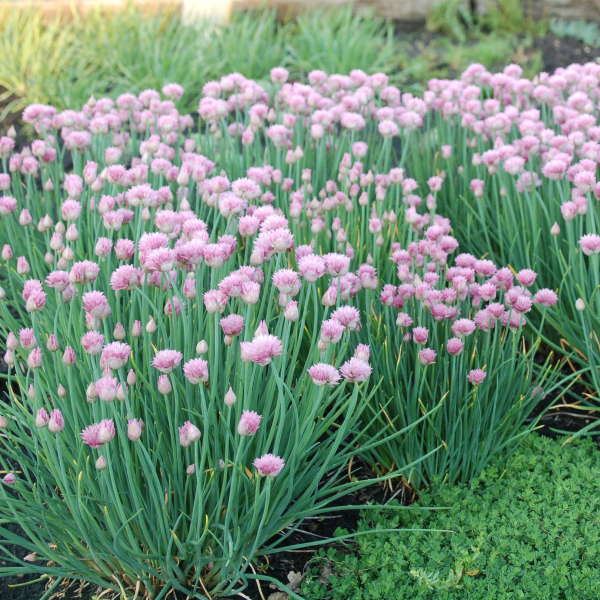
Allium schoenoprasum, commonly known as chives, is a herbaceous perennial plant that is native to Europe, Asia, and North America. It is a member of the onion family and produces small, pink to purple, pom-pom shaped flowers that bloom in late spring and early summer. The leaves are long, thin, and grass-like, with a mild onion flavor that is often used to add a subtle hint of onion to dishes.
Why we like it:
- Chives are easy to grow and require minimal care, making them a great choice for beginner gardeners.
- They are a versatile herb that can be used in a variety of culinary dishes, from soups and stews to salads and dips.
- The attractive flowers of chives make them a great addition to a garden, providing a pop of color and attracting pollinators such as bees and butterflies.
What to know:
- Chives prefer well-drained soil in a sunny location, but can also tolerate partial shade.
- Water regularly, but avoid overwatering, as chives are susceptible to root rot.
- Cut back the foliage after the flowers have finished blooming to encourage new growth and prevent the plant from becoming too leggy.
- Chives can be propagated by division, which should be done in the spring or autumn.
- Chives can be harvested throughout the growing season by cutting the leaves with scissors or a sharp knife, leaving at least 2 inches of growth to allow for regrowth.
Height and Spread:
- When fully grown, chives can reach a height of 30-50cm and a spread of 10-20cm.
More Images

Allium schoenoprasum (Chives) P9
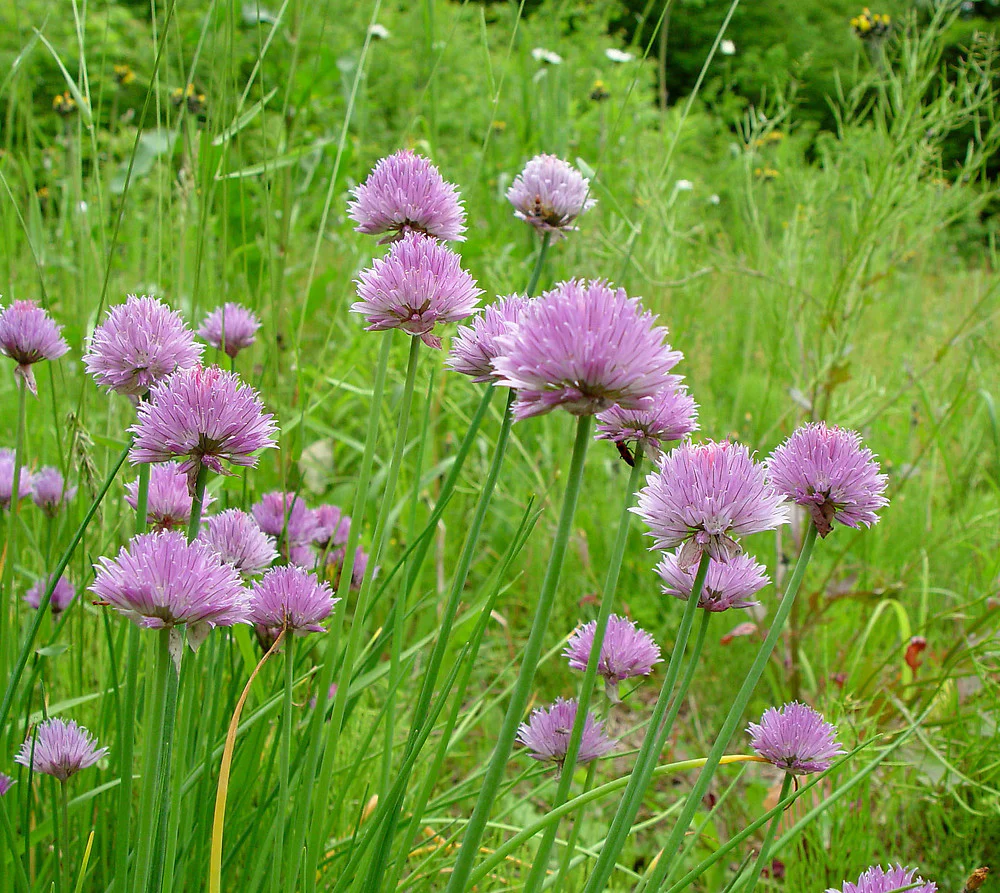
Allium schoenoprasum, commonly known as chives, is a herbaceous perennial plant that is native to Europe, Asia, and North America. It is a member of the onion family and produces small, pink to purple, pom-pom shaped flowers that bloom in late spring and early summer. The leaves are long, thin, and grass-like, with a mild onion flavor that is often used to add a subtle hint of onion to dishes.
Why we like it:
- Chives are easy to grow and require minimal care, making them a great choice for beginner gardeners.
- They are a versatile herb that can be used in a variety of culinary dishes, from soups and stews to salads and dips.
- The attractive flowers of chives make them a great addition to a garden, providing a pop of color and attracting pollinators such as bees and butterflies.
What to know:
- Chives prefer well-drained soil in a sunny location, but can also tolerate partial shade.
- Water regularly, but avoid overwatering, as chives are susceptible to root rot.
- Cut back the foliage after the flowers have finished blooming to encourage new growth and prevent the plant from becoming too leggy.
- Chives can be propagated by division, which should be done in the spring or autumn.
- Chives can be harvested throughout the growing season by cutting the leaves with scissors or a sharp knife, leaving at least 2 inches of growth to allow for regrowth.
Height and Spread:
- When fully grown, chives can reach a height of 30-50cm and a spread of 10-20cm.
Product Information
Product Information
Shipping & Returns
Shipping & Returns
Description
Allium schoenoprasum, commonly known as chives, is a herbaceous perennial plant that is native to Europe, Asia, and North America. It is a member of the onion family and produces small, pink to purple, pom-pom shaped flowers that bloom in late spring and early summer. The leaves are long, thin, and grass-like, with a mild onion flavor that is often used to add a subtle hint of onion to dishes.
Why we like it:
- Chives are easy to grow and require minimal care, making them a great choice for beginner gardeners.
- They are a versatile herb that can be used in a variety of culinary dishes, from soups and stews to salads and dips.
- The attractive flowers of chives make them a great addition to a garden, providing a pop of color and attracting pollinators such as bees and butterflies.
What to know:
- Chives prefer well-drained soil in a sunny location, but can also tolerate partial shade.
- Water regularly, but avoid overwatering, as chives are susceptible to root rot.
- Cut back the foliage after the flowers have finished blooming to encourage new growth and prevent the plant from becoming too leggy.
- Chives can be propagated by division, which should be done in the spring or autumn.
- Chives can be harvested throughout the growing season by cutting the leaves with scissors or a sharp knife, leaving at least 2 inches of growth to allow for regrowth.
Height and Spread:
- When fully grown, chives can reach a height of 30-50cm and a spread of 10-20cm.