Budwing Stick Insect
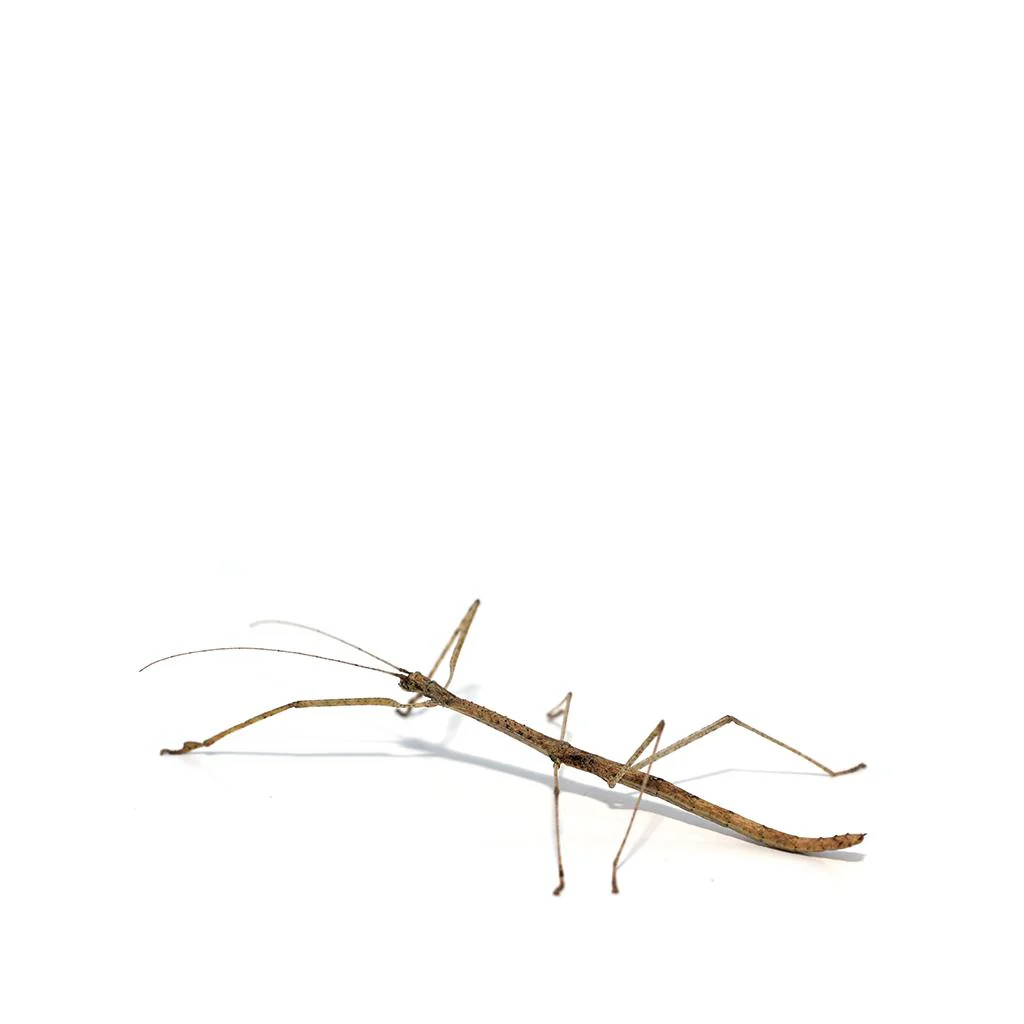
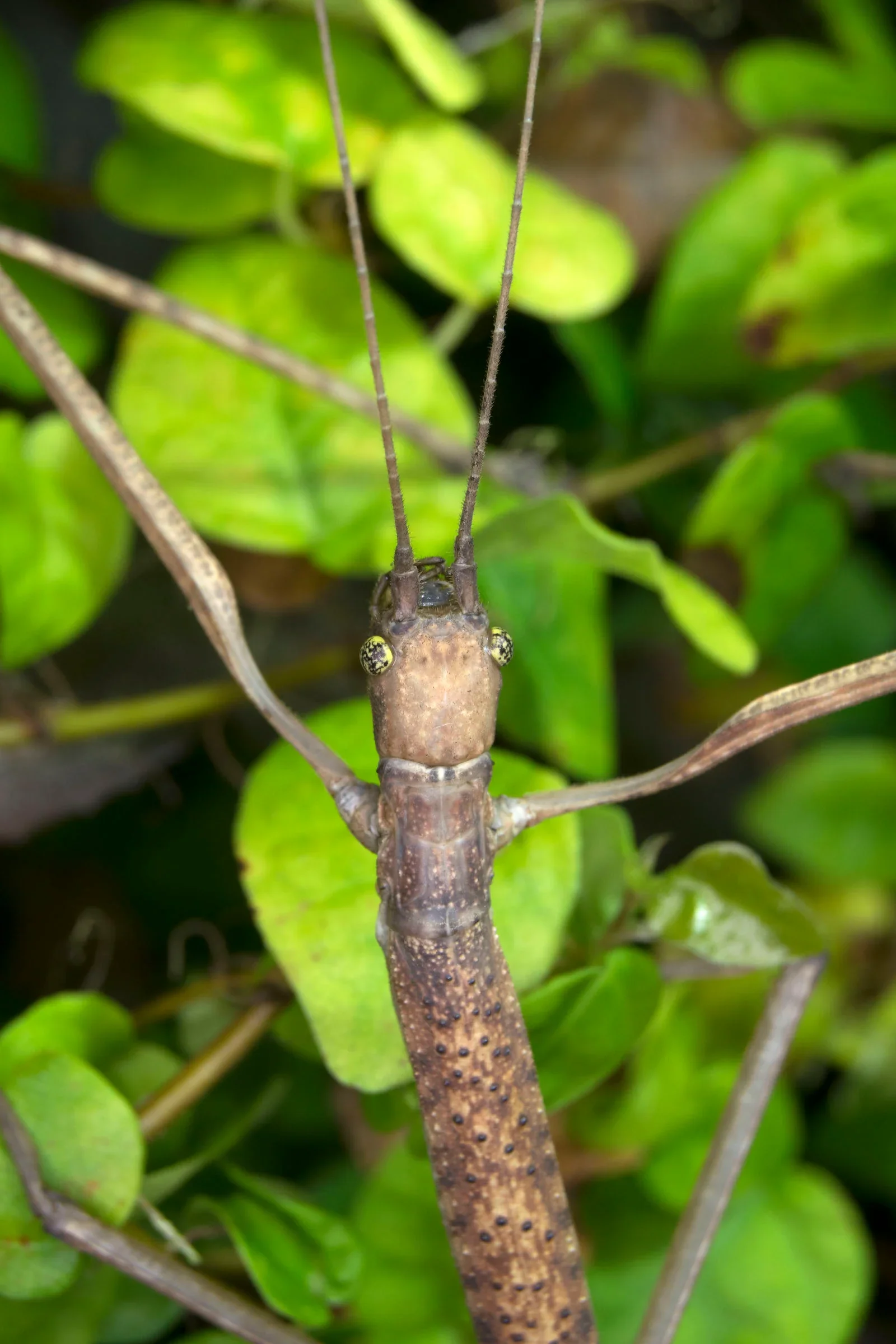
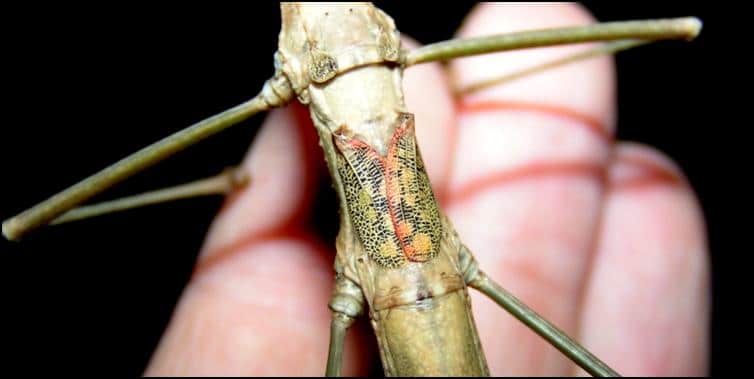
Budwing Stick Insect (Eurycnema goliath) Care Sheet
Quick Facts
| Attribute | Details |
|---|---|
| Common Name | Budwing Stick Insect |
| Scientific Name | Eurycnema goliath |
| Origin | Australia (Queensland, New South Wales) |
| Adult Size | 18–22 cm (body length, excluding legs) |
| Lifespan | 1–2 years |
| Activity | Nocturnal / crepuscular herbivore |
Behavior
-
Slow-moving and calm; rarely aggressive.
-
Excellent camouflage among foliage; remains motionless during the day.
-
Adults can drop limbs if stressed (autotomy), which may regenerate in juveniles.
-
Social species; can be housed in groups with sufficient space.
Enclosure Requirements
-
Tank Size: Minimum 30 liters for a single adult; larger for groups
-
Substrate: 2–4 cm of moist soil, coco fiber, or peat moss
-
Decor: Live or artificial plants for climbing and hiding; branches and foliage essential
-
Humidity: 60–80% (maintain moisture to prevent desiccation)
-
Temperature:
-
Day: 22–28°C
-
Night: 18–22°C
-
-
Lighting: Indirect or low light; avoid direct sunlight
-
Ventilation: Moderate airflow to prevent mold and maintain healthy foliage
Compatibility
-
Can be housed in small groups if space and food are sufficient.
-
Avoid aggressive or predatory insects in the same enclosure.
-
Non-aggressive with other stick insect species if enough room is provided.
Diet
-
Herbivorous; feeds on a variety of leafy plants.
-
Foods:
-
Bramble, raspberry, blackberry leaves
-
Oak, rose, ivy, eucalyptus (species-dependent)
-
Occasional soft vegetables (lettuce, spinach)
-
-
Remove uneaten food daily to prevent mold.
-
Provide fresh water via misting; insects drink water droplets.
Care Tips
-
Maintain consistent humidity and monitor substrate moisture.
-
Provide climbing opportunities and vertical space.
-
Avoid excessive handling; delicate legs and wings can break.
-
Clean enclosure every 2–3 weeks; remove waste and decaying food.
-
Monitor for molting difficulties; high humidity helps successful molts.
Breeding
-
Females lay eggs, often resembling seeds, in soil or on leaves.
-
Incubation: 3–6 months depending on temperature and humidity.
-
Nymphs require higher humidity and tender foliage.
-
Can be housed together, but ensure sufficient food and space.
Visual Quick Guide
-
🏠 Enclosure: ≥30 L, climbing branches, leafy plants
-
🌡️ Temp: Day 22–28°C / Night 18–22°C
-
💧 Humidity: 60–80%
-
🍴 Diet: Herbivore (leaves, occasional vegetables)
-
🕒 Activity: Nocturnal / crepuscular
-
⚠️ Stress: Avoid excessive handling; provide vertical space
Original: $6.96
-65%$6.96
$2.44More Images
Budwing Stick Insect
Budwing Stick Insect (Eurycnema goliath) Care Sheet
Quick Facts
| Attribute | Details |
|---|---|
| Common Name | Budwing Stick Insect |
| Scientific Name | Eurycnema goliath |
| Origin | Australia (Queensland, New South Wales) |
| Adult Size | 18–22 cm (body length, excluding legs) |
| Lifespan | 1–2 years |
| Activity | Nocturnal / crepuscular herbivore |
Behavior
-
Slow-moving and calm; rarely aggressive.
-
Excellent camouflage among foliage; remains motionless during the day.
-
Adults can drop limbs if stressed (autotomy), which may regenerate in juveniles.
-
Social species; can be housed in groups with sufficient space.
Enclosure Requirements
-
Tank Size: Minimum 30 liters for a single adult; larger for groups
-
Substrate: 2–4 cm of moist soil, coco fiber, or peat moss
-
Decor: Live or artificial plants for climbing and hiding; branches and foliage essential
-
Humidity: 60–80% (maintain moisture to prevent desiccation)
-
Temperature:
-
Day: 22–28°C
-
Night: 18–22°C
-
-
Lighting: Indirect or low light; avoid direct sunlight
-
Ventilation: Moderate airflow to prevent mold and maintain healthy foliage
Compatibility
-
Can be housed in small groups if space and food are sufficient.
-
Avoid aggressive or predatory insects in the same enclosure.
-
Non-aggressive with other stick insect species if enough room is provided.
Diet
-
Herbivorous; feeds on a variety of leafy plants.
-
Foods:
-
Bramble, raspberry, blackberry leaves
-
Oak, rose, ivy, eucalyptus (species-dependent)
-
Occasional soft vegetables (lettuce, spinach)
-
-
Remove uneaten food daily to prevent mold.
-
Provide fresh water via misting; insects drink water droplets.
Care Tips
-
Maintain consistent humidity and monitor substrate moisture.
-
Provide climbing opportunities and vertical space.
-
Avoid excessive handling; delicate legs and wings can break.
-
Clean enclosure every 2–3 weeks; remove waste and decaying food.
-
Monitor for molting difficulties; high humidity helps successful molts.
Breeding
-
Females lay eggs, often resembling seeds, in soil or on leaves.
-
Incubation: 3–6 months depending on temperature and humidity.
-
Nymphs require higher humidity and tender foliage.
-
Can be housed together, but ensure sufficient food and space.
Visual Quick Guide
-
🏠 Enclosure: ≥30 L, climbing branches, leafy plants
-
🌡️ Temp: Day 22–28°C / Night 18–22°C
-
💧 Humidity: 60–80%
-
🍴 Diet: Herbivore (leaves, occasional vegetables)
-
🕒 Activity: Nocturnal / crepuscular
-
⚠️ Stress: Avoid excessive handling; provide vertical space
Product Information
Product Information
Shipping & Returns
Shipping & Returns
Description
Budwing Stick Insect (Eurycnema goliath) Care Sheet
Quick Facts
| Attribute | Details |
|---|---|
| Common Name | Budwing Stick Insect |
| Scientific Name | Eurycnema goliath |
| Origin | Australia (Queensland, New South Wales) |
| Adult Size | 18–22 cm (body length, excluding legs) |
| Lifespan | 1–2 years |
| Activity | Nocturnal / crepuscular herbivore |
Behavior
-
Slow-moving and calm; rarely aggressive.
-
Excellent camouflage among foliage; remains motionless during the day.
-
Adults can drop limbs if stressed (autotomy), which may regenerate in juveniles.
-
Social species; can be housed in groups with sufficient space.
Enclosure Requirements
-
Tank Size: Minimum 30 liters for a single adult; larger for groups
-
Substrate: 2–4 cm of moist soil, coco fiber, or peat moss
-
Decor: Live or artificial plants for climbing and hiding; branches and foliage essential
-
Humidity: 60–80% (maintain moisture to prevent desiccation)
-
Temperature:
-
Day: 22–28°C
-
Night: 18–22°C
-
-
Lighting: Indirect or low light; avoid direct sunlight
-
Ventilation: Moderate airflow to prevent mold and maintain healthy foliage
Compatibility
-
Can be housed in small groups if space and food are sufficient.
-
Avoid aggressive or predatory insects in the same enclosure.
-
Non-aggressive with other stick insect species if enough room is provided.
Diet
-
Herbivorous; feeds on a variety of leafy plants.
-
Foods:
-
Bramble, raspberry, blackberry leaves
-
Oak, rose, ivy, eucalyptus (species-dependent)
-
Occasional soft vegetables (lettuce, spinach)
-
-
Remove uneaten food daily to prevent mold.
-
Provide fresh water via misting; insects drink water droplets.
Care Tips
-
Maintain consistent humidity and monitor substrate moisture.
-
Provide climbing opportunities and vertical space.
-
Avoid excessive handling; delicate legs and wings can break.
-
Clean enclosure every 2–3 weeks; remove waste and decaying food.
-
Monitor for molting difficulties; high humidity helps successful molts.
Breeding
-
Females lay eggs, often resembling seeds, in soil or on leaves.
-
Incubation: 3–6 months depending on temperature and humidity.
-
Nymphs require higher humidity and tender foliage.
-
Can be housed together, but ensure sufficient food and space.
Visual Quick Guide
-
🏠 Enclosure: ≥30 L, climbing branches, leafy plants
-
🌡️ Temp: Day 22–28°C / Night 18–22°C
-
💧 Humidity: 60–80%
-
🍴 Diet: Herbivore (leaves, occasional vegetables)
-
🕒 Activity: Nocturnal / crepuscular
-
⚠️ Stress: Avoid excessive handling; provide vertical space