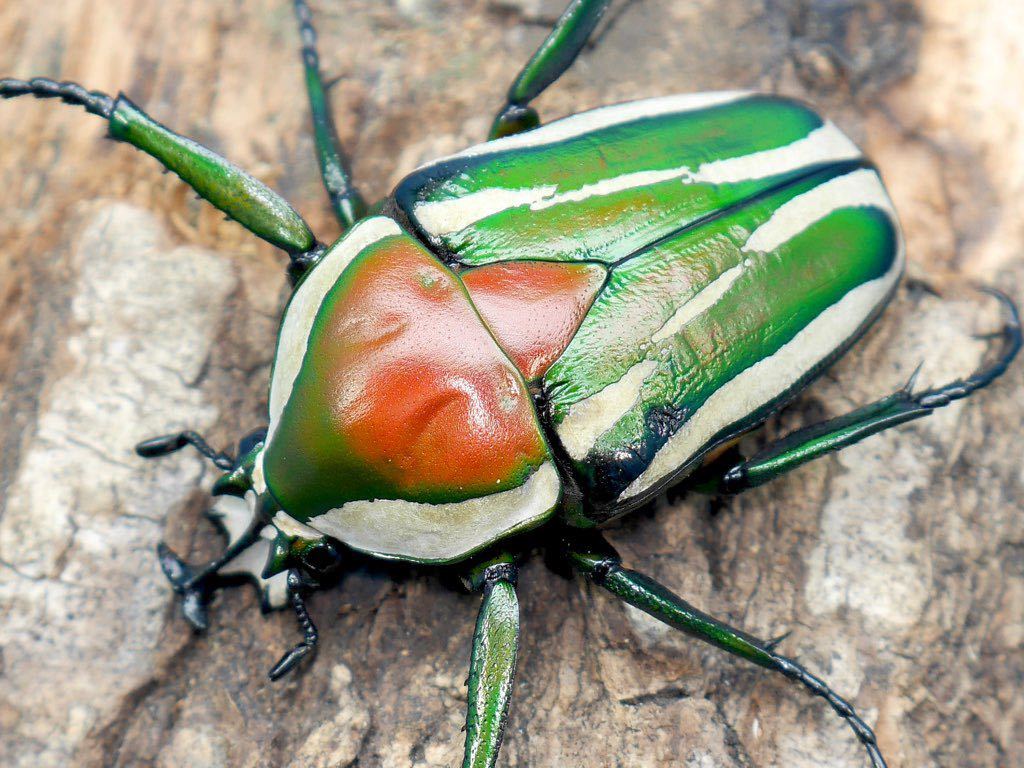
Derby’s Flower Beetle (Dicronorhina derbyana) Larva
Derby’s Flower Beetle (Dicronorhina derbyana) Care Sheet
Quick Facts
| Attribute | Details |
|---|---|
| Common Name | Derby’s Flower Beetle |
| Scientific Name | Dicronorhina derbyana |
| Origin | West Africa (Ghana, Ivory Coast, Togo) |
| Adult Size | 4–7 cm |
| Lifespan | 1–2 years |
| Activity | Diurnal, terrestrial |
Behavior
-
Active during the day; generally calm and non-aggressive.
-
Adults may occasionally compete for food but rarely fight.
-
Prefers hiding under leaf litter or decorative pieces when inactive.
Enclosure Requirements
-
Tank Size: Minimum 20–30 liters for 1–2 adults
-
Substrate: 5–8 cm of coconut fiber, soil, or leaf litter; keep slightly moist
-
Decor: Logs, bark pieces, leaves for hiding and climbing
-
Humidity: 65–75%
-
Temperature:
-
Day: 24–28°C
-
Night: 20–24°C
-
-
Lighting: Indirect light; avoid direct sunlight
-
Ventilation: Moderate airflow to prevent mold
Compatibility
-
Social species; multiple adults can be housed together if space allows.
-
Avoid predatory arthropods or smaller beetle species in the same enclosure.
Diet
-
Herbivorous / frugivorous; feeds on soft fruits and flower matter.
-
Foods:
-
Banana, apple, mango
-
Beetle jelly or commercial fruit supplements
-
-
Remove uneaten food promptly to prevent mold.
-
Provide shallow water dish or lightly mist enclosure.
Care Tips
-
Maintain consistent humidity to support molting.
-
Provide climbing and hiding opportunities with leaves and logs.
-
Avoid overhandling; adults are fragile.
-
Spot-clean enclosure regularly; remove mold and waste.
Breeding
-
Oviparous; females lay eggs in substrate.
-
Eggs hatch in ~2–3 weeks depending on temperature and humidity.
-
Larvae develop in substrate for 3–4 months before pupating.
-
Pupation occurs in a separate chamber; adults emerge in 6–8 weeks.
Visual Quick Guide
-
🏠 Enclosure: ≥20–30 L, terrestrial substrate, hides and climbing branches
-
🌡️ Temp: Day 24–28°C / Night 20–24°C
-
💧 Humidity: 65–75%
-
🍴 Diet: Herbivore (soft fruits, flower matter)
-
🕒 Activity: Diurnal
-
⚠️ Stress: Avoid excessive handling; provide climbing and hiding spots
Original: $35.99
-65%$35.99
$12.60Derby’s Flower Beetle (Dicronorhina derbyana) Larva
Derby’s Flower Beetle (Dicronorhina derbyana) Care Sheet
Quick Facts
| Attribute | Details |
|---|---|
| Common Name | Derby’s Flower Beetle |
| Scientific Name | Dicronorhina derbyana |
| Origin | West Africa (Ghana, Ivory Coast, Togo) |
| Adult Size | 4–7 cm |
| Lifespan | 1–2 years |
| Activity | Diurnal, terrestrial |
Behavior
-
Active during the day; generally calm and non-aggressive.
-
Adults may occasionally compete for food but rarely fight.
-
Prefers hiding under leaf litter or decorative pieces when inactive.
Enclosure Requirements
-
Tank Size: Minimum 20–30 liters for 1–2 adults
-
Substrate: 5–8 cm of coconut fiber, soil, or leaf litter; keep slightly moist
-
Decor: Logs, bark pieces, leaves for hiding and climbing
-
Humidity: 65–75%
-
Temperature:
-
Day: 24–28°C
-
Night: 20–24°C
-
-
Lighting: Indirect light; avoid direct sunlight
-
Ventilation: Moderate airflow to prevent mold
Compatibility
-
Social species; multiple adults can be housed together if space allows.
-
Avoid predatory arthropods or smaller beetle species in the same enclosure.
Diet
-
Herbivorous / frugivorous; feeds on soft fruits and flower matter.
-
Foods:
-
Banana, apple, mango
-
Beetle jelly or commercial fruit supplements
-
-
Remove uneaten food promptly to prevent mold.
-
Provide shallow water dish or lightly mist enclosure.
Care Tips
-
Maintain consistent humidity to support molting.
-
Provide climbing and hiding opportunities with leaves and logs.
-
Avoid overhandling; adults are fragile.
-
Spot-clean enclosure regularly; remove mold and waste.
Breeding
-
Oviparous; females lay eggs in substrate.
-
Eggs hatch in ~2–3 weeks depending on temperature and humidity.
-
Larvae develop in substrate for 3–4 months before pupating.
-
Pupation occurs in a separate chamber; adults emerge in 6–8 weeks.
Visual Quick Guide
-
🏠 Enclosure: ≥20–30 L, terrestrial substrate, hides and climbing branches
-
🌡️ Temp: Day 24–28°C / Night 20–24°C
-
💧 Humidity: 65–75%
-
🍴 Diet: Herbivore (soft fruits, flower matter)
-
🕒 Activity: Diurnal
-
⚠️ Stress: Avoid excessive handling; provide climbing and hiding spots
Product Information
Product Information
Shipping & Returns
Shipping & Returns
Description
Derby’s Flower Beetle (Dicronorhina derbyana) Care Sheet
Quick Facts
| Attribute | Details |
|---|---|
| Common Name | Derby’s Flower Beetle |
| Scientific Name | Dicronorhina derbyana |
| Origin | West Africa (Ghana, Ivory Coast, Togo) |
| Adult Size | 4–7 cm |
| Lifespan | 1–2 years |
| Activity | Diurnal, terrestrial |
Behavior
-
Active during the day; generally calm and non-aggressive.
-
Adults may occasionally compete for food but rarely fight.
-
Prefers hiding under leaf litter or decorative pieces when inactive.
Enclosure Requirements
-
Tank Size: Minimum 20–30 liters for 1–2 adults
-
Substrate: 5–8 cm of coconut fiber, soil, or leaf litter; keep slightly moist
-
Decor: Logs, bark pieces, leaves for hiding and climbing
-
Humidity: 65–75%
-
Temperature:
-
Day: 24–28°C
-
Night: 20–24°C
-
-
Lighting: Indirect light; avoid direct sunlight
-
Ventilation: Moderate airflow to prevent mold
Compatibility
-
Social species; multiple adults can be housed together if space allows.
-
Avoid predatory arthropods or smaller beetle species in the same enclosure.
Diet
-
Herbivorous / frugivorous; feeds on soft fruits and flower matter.
-
Foods:
-
Banana, apple, mango
-
Beetle jelly or commercial fruit supplements
-
-
Remove uneaten food promptly to prevent mold.
-
Provide shallow water dish or lightly mist enclosure.
Care Tips
-
Maintain consistent humidity to support molting.
-
Provide climbing and hiding opportunities with leaves and logs.
-
Avoid overhandling; adults are fragile.
-
Spot-clean enclosure regularly; remove mold and waste.
Breeding
-
Oviparous; females lay eggs in substrate.
-
Eggs hatch in ~2–3 weeks depending on temperature and humidity.
-
Larvae develop in substrate for 3–4 months before pupating.
-
Pupation occurs in a separate chamber; adults emerge in 6–8 weeks.
Visual Quick Guide
-
🏠 Enclosure: ≥20–30 L, terrestrial substrate, hides and climbing branches
-
🌡️ Temp: Day 24–28°C / Night 20–24°C
-
💧 Humidity: 65–75%
-
🍴 Diet: Herbivore (soft fruits, flower matter)
-
🕒 Activity: Diurnal
-
⚠️ Stress: Avoid excessive handling; provide climbing and hiding spots