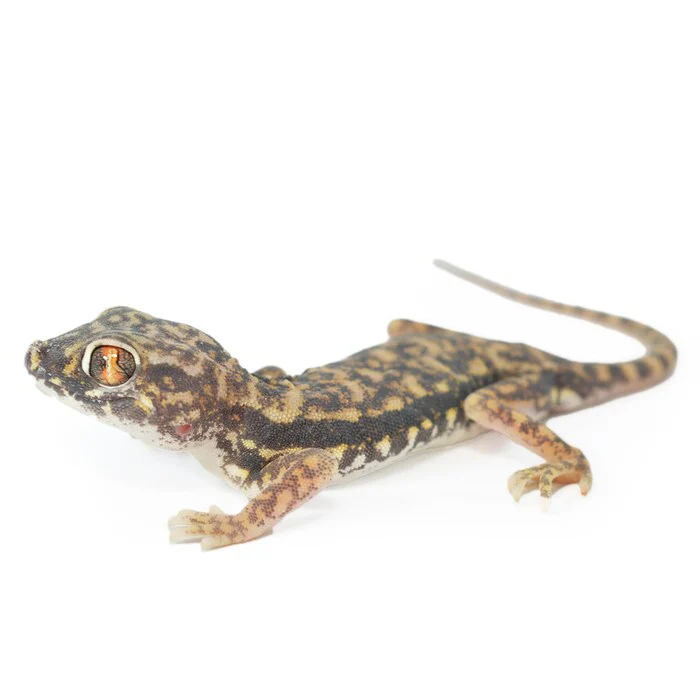
Dune Gecko
Dune Gecko (Stenodactylus petrii) Care Sheet
Quick Facts
| Attribute | Details |
|---|---|
| Common Name | Dune Gecko |
| Scientific Name | Stenodactylus petrii |
| Origin | Middle East / North Africa (desert regions) |
| Adult Size | 5–7 cm |
| Lifespan | 4–6 years in captivity |
| Activity | Nocturnal, terrestrial / sand-dwelling |
Behavior
-
Small, agile, and extremely fast-moving; primarily nocturnal.
-
Terrestrial; spends most of its time burrowing in loose sand.
-
Can be shy; minimal handling is recommended.
-
Excellent for desert terrariums; uses tail for balance and displays alert posture when hunting.
Enclosure Requirements
-
Tank Size: Minimum 30–40 liters for a pair
-
Substrate: Fine desert sand or sand-soil mix at least 5–10 cm deep for burrowing
-
Decor: Flat rocks, cork bark, shallow hides, and small branches for climbing
-
Humidity: 20–35%
-
Temperature:
-
Warm / basking spot: 30–33°C
-
Ambient: 24–28°C
-
Night: 20–22°C
-
-
Lighting: Low to moderate light; UVB optional but recommended for health
-
Ventilation: Good airflow; avoid high humidity
Compatibility
-
Can be housed in pairs or small groups with monitoring.
-
Avoid housing with larger, aggressive, or fast-moving species that may stress the geckos.
Diet
-
Carnivorous; feeds on small insects:
-
Pinhead crickets, fruit flies, small roaches, springtails
-
-
Juveniles: feed daily
-
Adults: feed every 2–3 days
-
Provide small shallow water dish or mist lightly; geckos get most hydration from prey
Care Tips
-
Provide deep substrate for natural burrowing and hiding.
-
Spot-clean daily; remove feces and uneaten prey.
-
Handle minimally; stress can negatively impact health.
-
Maintain warm temperature gradient for thermoregulation.
Breeding
-
Oviparous; females lay 1–2 eggs in loose sand or burrows.
-
Incubation: 50–65 days at 28–30°C.
-
Hatchlings are independent and require appropriately sized insects.
Visual Quick Guide
-
🏠 Enclosure: ≥30–40 L, deep sandy substrate, hides, flat rocks
-
🌡️ Temp: Warm spot 30–33°C / Ambient 24–28°C / Night 20–22°C
-
💧 Humidity: 20–35%
-
🍴 Diet: Carnivorous (small insects)
-
🕒 Activity: Nocturnal, terrestrial, burrower
-
⚠️ Stress: Provide deep substrate, hides, and minimal handling
Please note: We don't ship live animals. You can order online and choose click and collect, and we will hold it for you.
More Images

Dune Gecko
Dune Gecko (Stenodactylus petrii) Care Sheet
Quick Facts
| Attribute | Details |
|---|---|
| Common Name | Dune Gecko |
| Scientific Name | Stenodactylus petrii |
| Origin | Middle East / North Africa (desert regions) |
| Adult Size | 5–7 cm |
| Lifespan | 4–6 years in captivity |
| Activity | Nocturnal, terrestrial / sand-dwelling |
Behavior
-
Small, agile, and extremely fast-moving; primarily nocturnal.
-
Terrestrial; spends most of its time burrowing in loose sand.
-
Can be shy; minimal handling is recommended.
-
Excellent for desert terrariums; uses tail for balance and displays alert posture when hunting.
Enclosure Requirements
-
Tank Size: Minimum 30–40 liters for a pair
-
Substrate: Fine desert sand or sand-soil mix at least 5–10 cm deep for burrowing
-
Decor: Flat rocks, cork bark, shallow hides, and small branches for climbing
-
Humidity: 20–35%
-
Temperature:
-
Warm / basking spot: 30–33°C
-
Ambient: 24–28°C
-
Night: 20–22°C
-
-
Lighting: Low to moderate light; UVB optional but recommended for health
-
Ventilation: Good airflow; avoid high humidity
Compatibility
-
Can be housed in pairs or small groups with monitoring.
-
Avoid housing with larger, aggressive, or fast-moving species that may stress the geckos.
Diet
-
Carnivorous; feeds on small insects:
-
Pinhead crickets, fruit flies, small roaches, springtails
-
-
Juveniles: feed daily
-
Adults: feed every 2–3 days
-
Provide small shallow water dish or mist lightly; geckos get most hydration from prey
Care Tips
-
Provide deep substrate for natural burrowing and hiding.
-
Spot-clean daily; remove feces and uneaten prey.
-
Handle minimally; stress can negatively impact health.
-
Maintain warm temperature gradient for thermoregulation.
Breeding
-
Oviparous; females lay 1–2 eggs in loose sand or burrows.
-
Incubation: 50–65 days at 28–30°C.
-
Hatchlings are independent and require appropriately sized insects.
Visual Quick Guide
-
🏠 Enclosure: ≥30–40 L, deep sandy substrate, hides, flat rocks
-
🌡️ Temp: Warm spot 30–33°C / Ambient 24–28°C / Night 20–22°C
-
💧 Humidity: 20–35%
-
🍴 Diet: Carnivorous (small insects)
-
🕒 Activity: Nocturnal, terrestrial, burrower
-
⚠️ Stress: Provide deep substrate, hides, and minimal handling
Please note: We don't ship live animals. You can order online and choose click and collect, and we will hold it for you.
Product Information
Product Information
Shipping & Returns
Shipping & Returns
Description
Dune Gecko (Stenodactylus petrii) Care Sheet
Quick Facts
| Attribute | Details |
|---|---|
| Common Name | Dune Gecko |
| Scientific Name | Stenodactylus petrii |
| Origin | Middle East / North Africa (desert regions) |
| Adult Size | 5–7 cm |
| Lifespan | 4–6 years in captivity |
| Activity | Nocturnal, terrestrial / sand-dwelling |
Behavior
-
Small, agile, and extremely fast-moving; primarily nocturnal.
-
Terrestrial; spends most of its time burrowing in loose sand.
-
Can be shy; minimal handling is recommended.
-
Excellent for desert terrariums; uses tail for balance and displays alert posture when hunting.
Enclosure Requirements
-
Tank Size: Minimum 30–40 liters for a pair
-
Substrate: Fine desert sand or sand-soil mix at least 5–10 cm deep for burrowing
-
Decor: Flat rocks, cork bark, shallow hides, and small branches for climbing
-
Humidity: 20–35%
-
Temperature:
-
Warm / basking spot: 30–33°C
-
Ambient: 24–28°C
-
Night: 20–22°C
-
-
Lighting: Low to moderate light; UVB optional but recommended for health
-
Ventilation: Good airflow; avoid high humidity
Compatibility
-
Can be housed in pairs or small groups with monitoring.
-
Avoid housing with larger, aggressive, or fast-moving species that may stress the geckos.
Diet
-
Carnivorous; feeds on small insects:
-
Pinhead crickets, fruit flies, small roaches, springtails
-
-
Juveniles: feed daily
-
Adults: feed every 2–3 days
-
Provide small shallow water dish or mist lightly; geckos get most hydration from prey
Care Tips
-
Provide deep substrate for natural burrowing and hiding.
-
Spot-clean daily; remove feces and uneaten prey.
-
Handle minimally; stress can negatively impact health.
-
Maintain warm temperature gradient for thermoregulation.
Breeding
-
Oviparous; females lay 1–2 eggs in loose sand or burrows.
-
Incubation: 50–65 days at 28–30°C.
-
Hatchlings are independent and require appropriately sized insects.
Visual Quick Guide
-
🏠 Enclosure: ≥30–40 L, deep sandy substrate, hides, flat rocks
-
🌡️ Temp: Warm spot 30–33°C / Ambient 24–28°C / Night 20–22°C
-
💧 Humidity: 20–35%
-
🍴 Diet: Carnivorous (small insects)
-
🕒 Activity: Nocturnal, terrestrial, burrower
-
⚠️ Stress: Provide deep substrate, hides, and minimal handling
Please note: We don't ship live animals. You can order online and choose click and collect, and we will hold it for you.