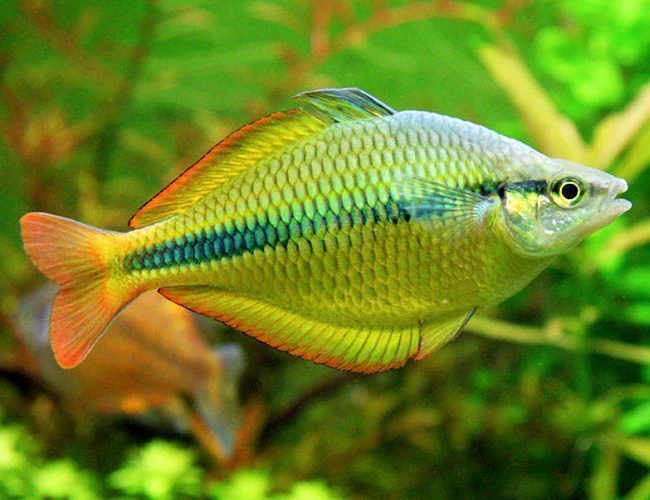
Yellow Rainbow Fish 1.5 Inch
🐟 Yellow Rainbowfish (Melanotaenia parkinsoni “Golden”) Care Sheet
🔹 Overview
| Category | Details |
|---|---|
| Scientific Name | Melanotaenia parkinsoni |
| Common Name | Yellow Rainbowfish, Golden Rainbowfish |
| Origin | Southern Papua New Guinea |
| Adult Size | 10–12 cm (4–5 in) |
| Lifespan | 5–8 years |
| Temperament | Peaceful, active schooling fish |
| Tank Level | Mid to upper |
🔹 Tank Setup
| Parameter | Ideal Range |
|---|---|
| Tank Size | 75+ liters (20+ gallons) for a small group |
| Temperature | 24–28 °C (75–82 °F) |
| pH | 6.5–7.5 |
| Hardness | 5–15 dGH |
| Substrate | Sand or fine gravel |
| Decor | Plants, driftwood, open swimming areas |
| Lighting | Moderate to bright |
| Filtration | Efficient filtration; gentle to moderate flow |
Tips:
-
Keep in groups of at least 6 to encourage natural schooling behavior.
-
Provide a mix of plants and open swimming space to mimic natural habitats.
-
Regular water changes improve coloration and health.
🔹 Diet
-
Type: Omnivorous
-
Best Foods: Flakes, pellets, live/frozen foods (brine shrimp, daphnia, bloodworms), and occasional vegetable matter.
-
Feeding Frequency: 2–3 small feedings daily.
🔹 Behavior & Compatibility
-
Very peaceful, suitable for community tanks with similarly sized, non-aggressive fish.
-
Active swimmers; enjoy mid to upper tank levels.
-
Males display bright golden coloration more intensely when in groups.
🧭 Tank Mate Guide
✅ Compatible Species
-
Other Rainbowfish species
-
Tetras (larger, peaceful species)
-
Corydoras Catfish
-
Gouramis (peaceful varieties)
-
Plecos and other bottom dwellers
⚠️ Avoid or Use Caution With
-
Aggressive or fin-nipping fish
-
Very small fish that may be harassed or eaten
-
Large predatory species
🐣 Breeding Info
-
Spawning Method: Egg scatterers; prefer fine-leaved plants or spawning mops.
-
Parental Care: None; adults may eat eggs.
-
Fry Care: Feed infusoria or liquid fry food, then baby brine shrimp as they grow.
-
Maintain clean water and stable temperature for successful breeding.
🌿 Fun Facts
-
Popular for bright yellow coloration, especially males.
-
Active and visually striking — excellent centerpiece fish in community tanks.
-
Can live harmoniously with a wide range of other peaceful tropical fish.
More Images
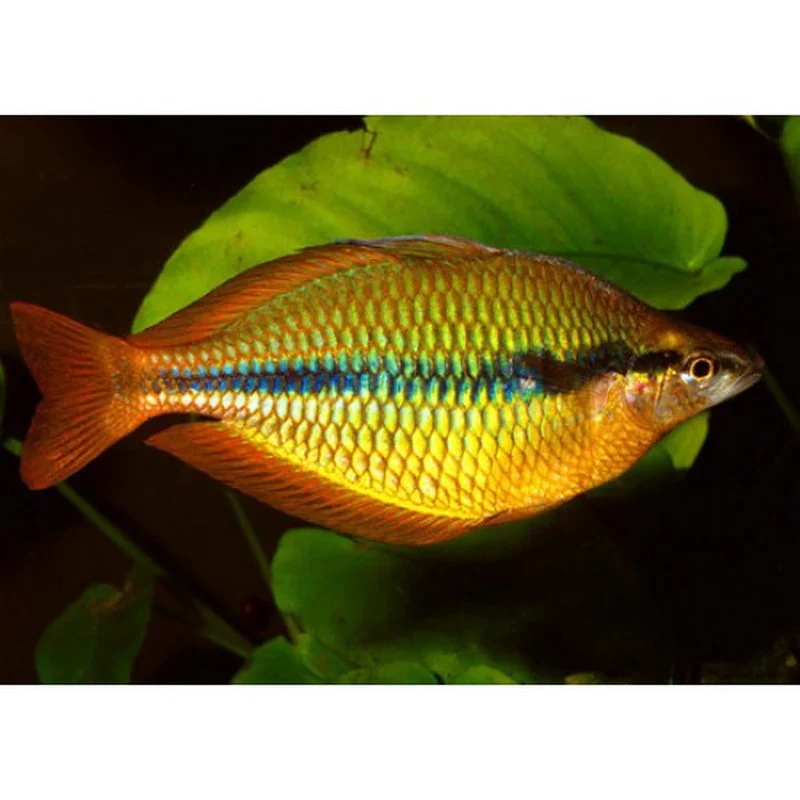
Yellow Rainbow Fish 1.5 Inch
🐟 Yellow Rainbowfish (Melanotaenia parkinsoni “Golden”) Care Sheet
🔹 Overview
| Category | Details |
|---|---|
| Scientific Name | Melanotaenia parkinsoni |
| Common Name | Yellow Rainbowfish, Golden Rainbowfish |
| Origin | Southern Papua New Guinea |
| Adult Size | 10–12 cm (4–5 in) |
| Lifespan | 5–8 years |
| Temperament | Peaceful, active schooling fish |
| Tank Level | Mid to upper |
🔹 Tank Setup
| Parameter | Ideal Range |
|---|---|
| Tank Size | 75+ liters (20+ gallons) for a small group |
| Temperature | 24–28 °C (75–82 °F) |
| pH | 6.5–7.5 |
| Hardness | 5–15 dGH |
| Substrate | Sand or fine gravel |
| Decor | Plants, driftwood, open swimming areas |
| Lighting | Moderate to bright |
| Filtration | Efficient filtration; gentle to moderate flow |
Tips:
-
Keep in groups of at least 6 to encourage natural schooling behavior.
-
Provide a mix of plants and open swimming space to mimic natural habitats.
-
Regular water changes improve coloration and health.
🔹 Diet
-
Type: Omnivorous
-
Best Foods: Flakes, pellets, live/frozen foods (brine shrimp, daphnia, bloodworms), and occasional vegetable matter.
-
Feeding Frequency: 2–3 small feedings daily.
🔹 Behavior & Compatibility
-
Very peaceful, suitable for community tanks with similarly sized, non-aggressive fish.
-
Active swimmers; enjoy mid to upper tank levels.
-
Males display bright golden coloration more intensely when in groups.
🧭 Tank Mate Guide
✅ Compatible Species
-
Other Rainbowfish species
-
Tetras (larger, peaceful species)
-
Corydoras Catfish
-
Gouramis (peaceful varieties)
-
Plecos and other bottom dwellers
⚠️ Avoid or Use Caution With
-
Aggressive or fin-nipping fish
-
Very small fish that may be harassed or eaten
-
Large predatory species
🐣 Breeding Info
-
Spawning Method: Egg scatterers; prefer fine-leaved plants or spawning mops.
-
Parental Care: None; adults may eat eggs.
-
Fry Care: Feed infusoria or liquid fry food, then baby brine shrimp as they grow.
-
Maintain clean water and stable temperature for successful breeding.
🌿 Fun Facts
-
Popular for bright yellow coloration, especially males.
-
Active and visually striking — excellent centerpiece fish in community tanks.
-
Can live harmoniously with a wide range of other peaceful tropical fish.
Product Information
Product Information
Shipping & Returns
Shipping & Returns
Description
🐟 Yellow Rainbowfish (Melanotaenia parkinsoni “Golden”) Care Sheet
🔹 Overview
| Category | Details |
|---|---|
| Scientific Name | Melanotaenia parkinsoni |
| Common Name | Yellow Rainbowfish, Golden Rainbowfish |
| Origin | Southern Papua New Guinea |
| Adult Size | 10–12 cm (4–5 in) |
| Lifespan | 5–8 years |
| Temperament | Peaceful, active schooling fish |
| Tank Level | Mid to upper |
🔹 Tank Setup
| Parameter | Ideal Range |
|---|---|
| Tank Size | 75+ liters (20+ gallons) for a small group |
| Temperature | 24–28 °C (75–82 °F) |
| pH | 6.5–7.5 |
| Hardness | 5–15 dGH |
| Substrate | Sand or fine gravel |
| Decor | Plants, driftwood, open swimming areas |
| Lighting | Moderate to bright |
| Filtration | Efficient filtration; gentle to moderate flow |
Tips:
-
Keep in groups of at least 6 to encourage natural schooling behavior.
-
Provide a mix of plants and open swimming space to mimic natural habitats.
-
Regular water changes improve coloration and health.
🔹 Diet
-
Type: Omnivorous
-
Best Foods: Flakes, pellets, live/frozen foods (brine shrimp, daphnia, bloodworms), and occasional vegetable matter.
-
Feeding Frequency: 2–3 small feedings daily.
🔹 Behavior & Compatibility
-
Very peaceful, suitable for community tanks with similarly sized, non-aggressive fish.
-
Active swimmers; enjoy mid to upper tank levels.
-
Males display bright golden coloration more intensely when in groups.
🧭 Tank Mate Guide
✅ Compatible Species
-
Other Rainbowfish species
-
Tetras (larger, peaceful species)
-
Corydoras Catfish
-
Gouramis (peaceful varieties)
-
Plecos and other bottom dwellers
⚠️ Avoid or Use Caution With
-
Aggressive or fin-nipping fish
-
Very small fish that may be harassed or eaten
-
Large predatory species
🐣 Breeding Info
-
Spawning Method: Egg scatterers; prefer fine-leaved plants or spawning mops.
-
Parental Care: None; adults may eat eggs.
-
Fry Care: Feed infusoria or liquid fry food, then baby brine shrimp as they grow.
-
Maintain clean water and stable temperature for successful breeding.
🌿 Fun Facts
-
Popular for bright yellow coloration, especially males.
-
Active and visually striking — excellent centerpiece fish in community tanks.
-
Can live harmoniously with a wide range of other peaceful tropical fish.