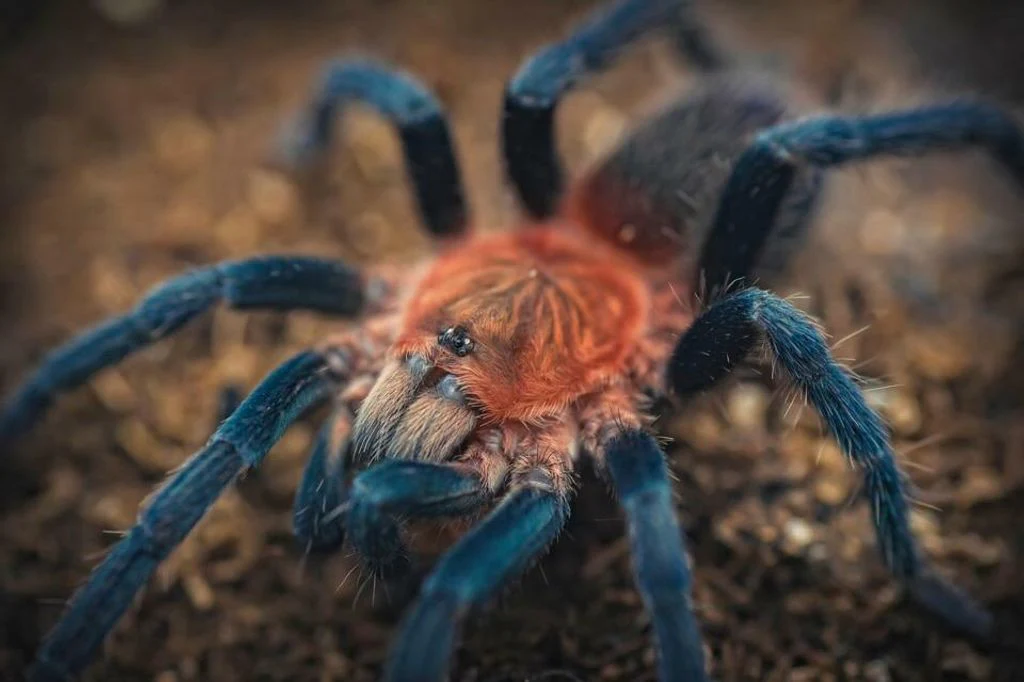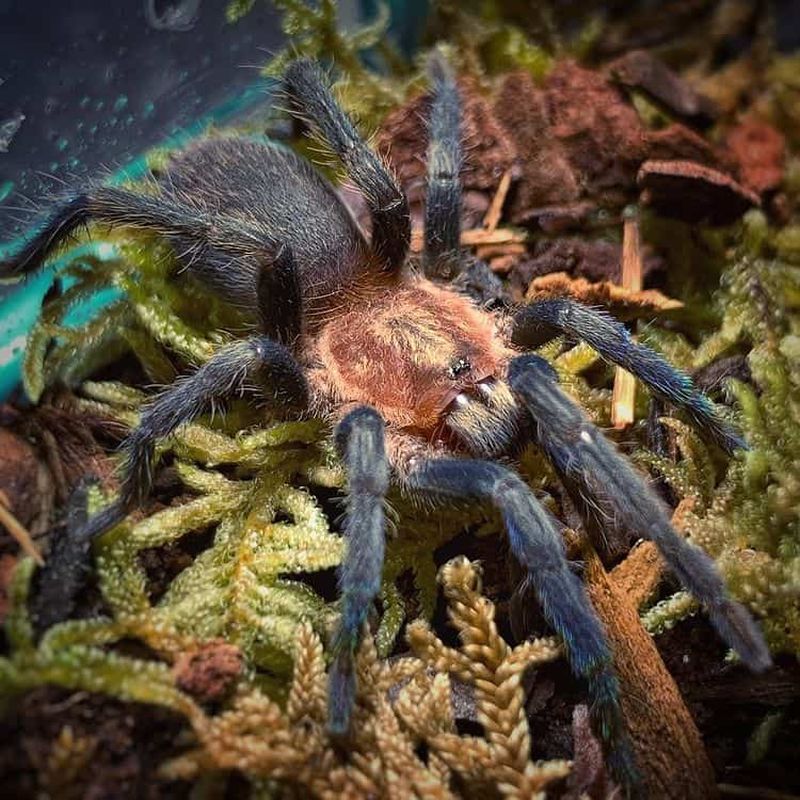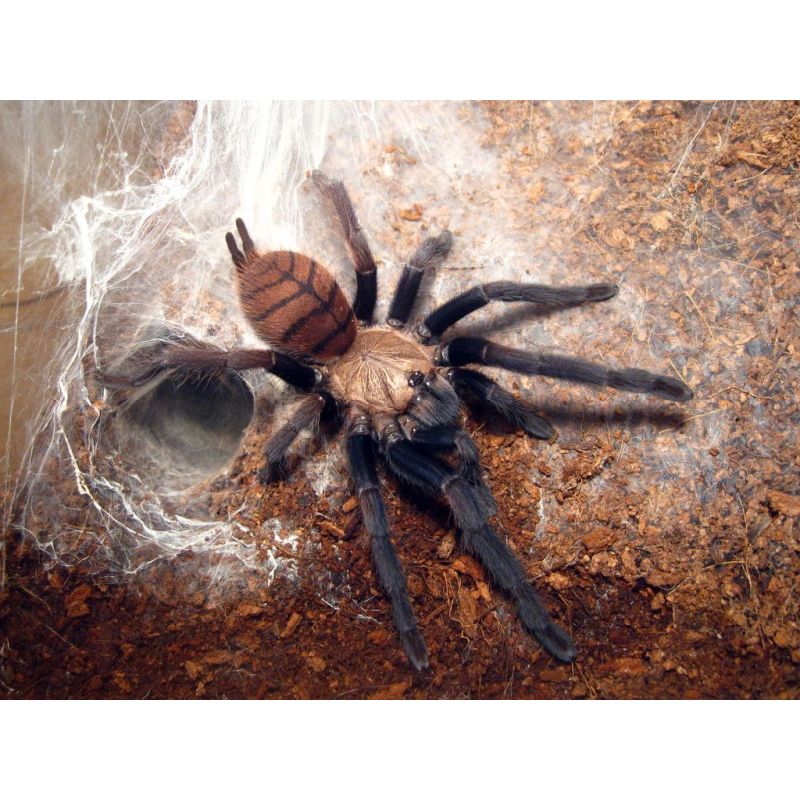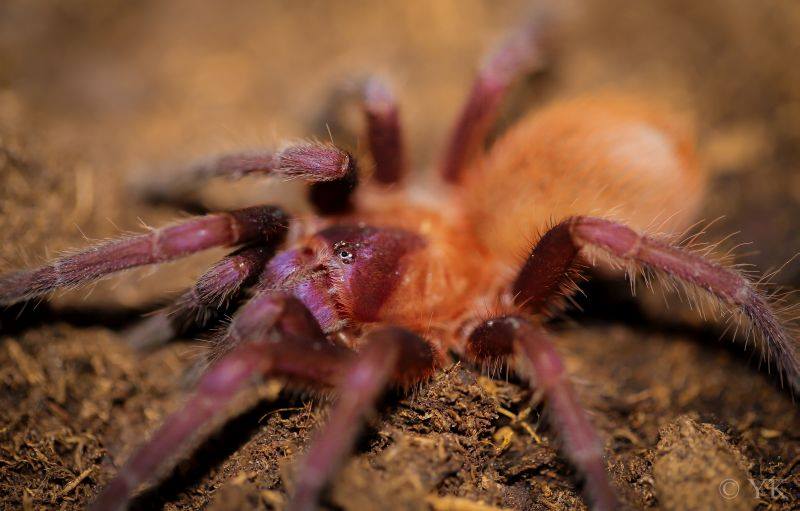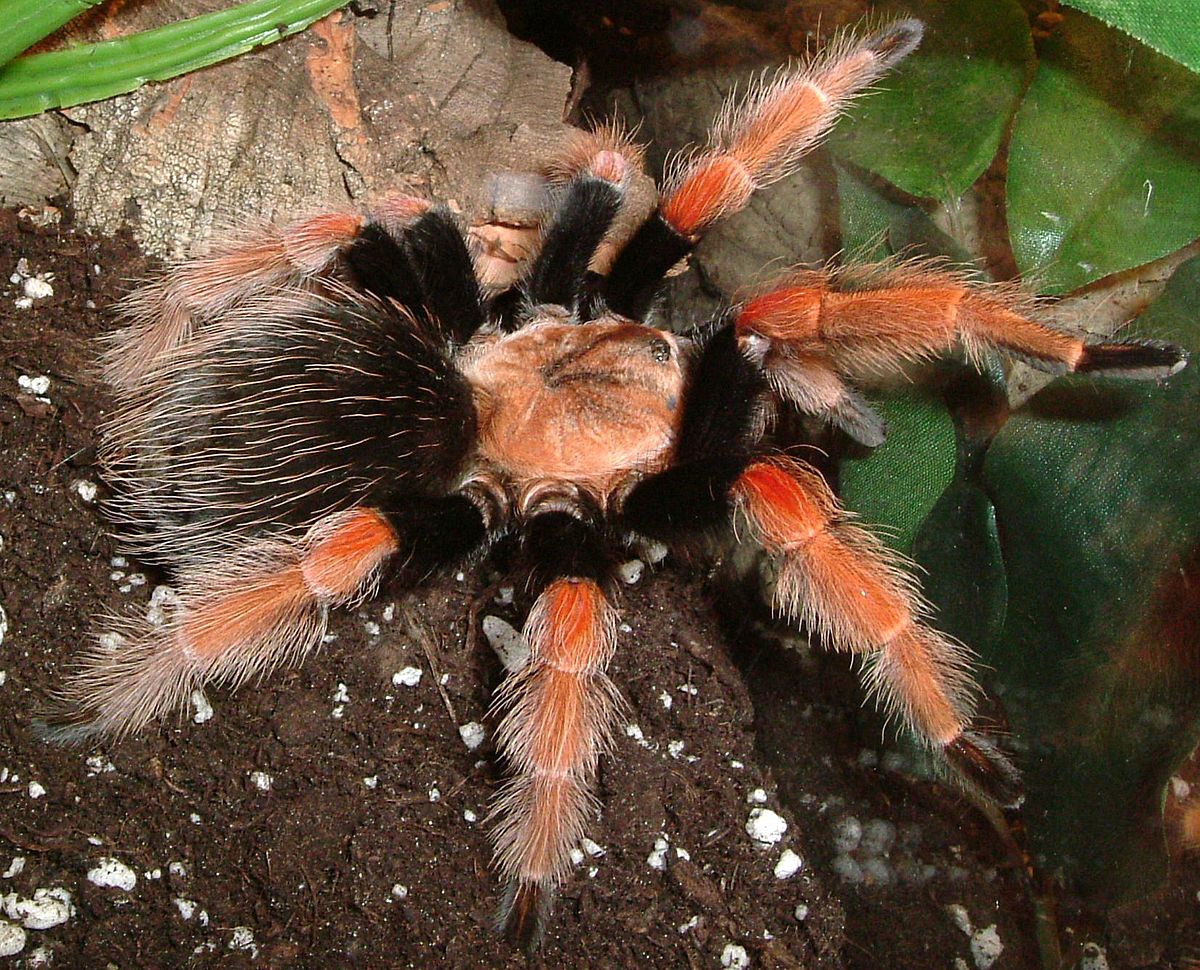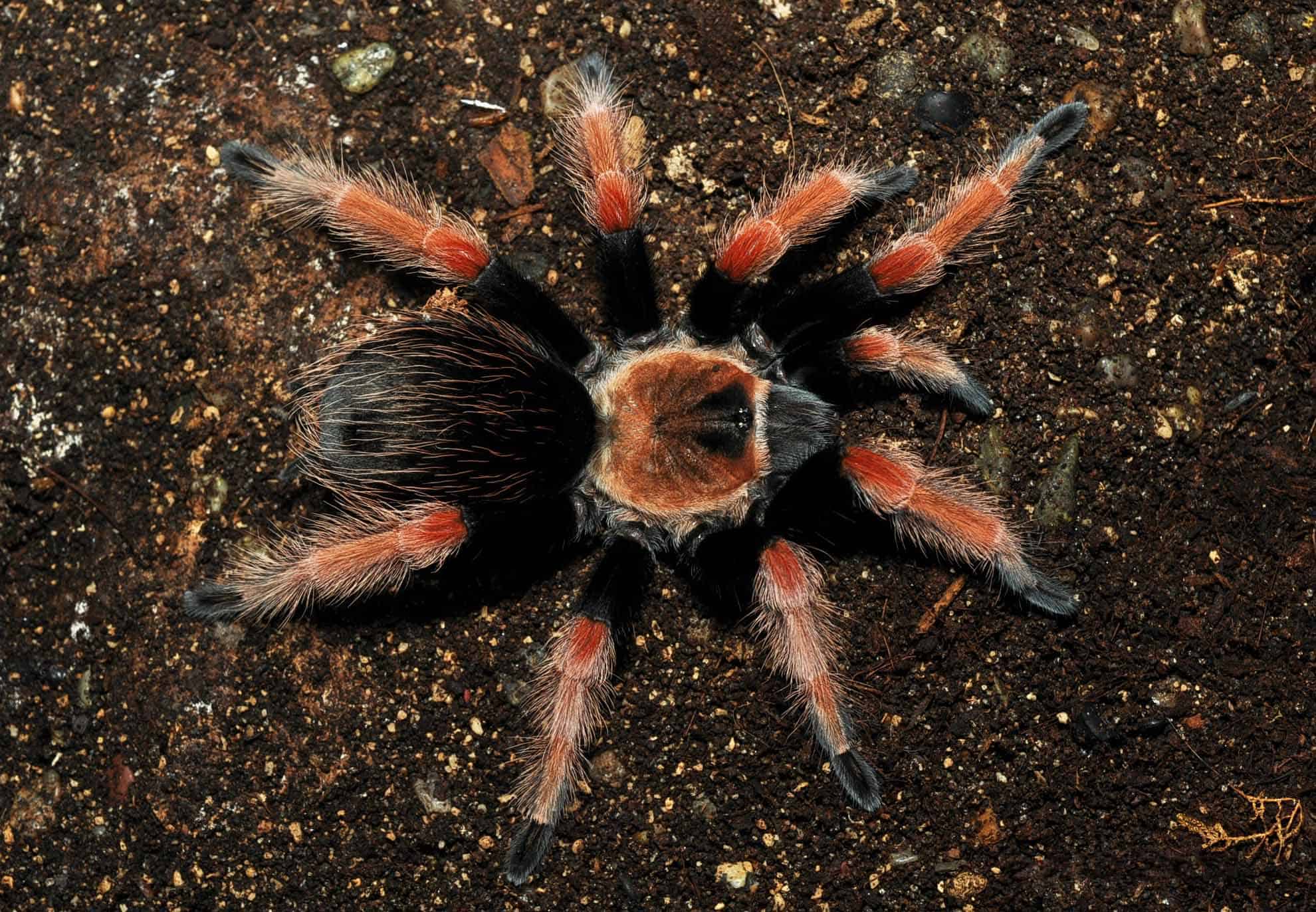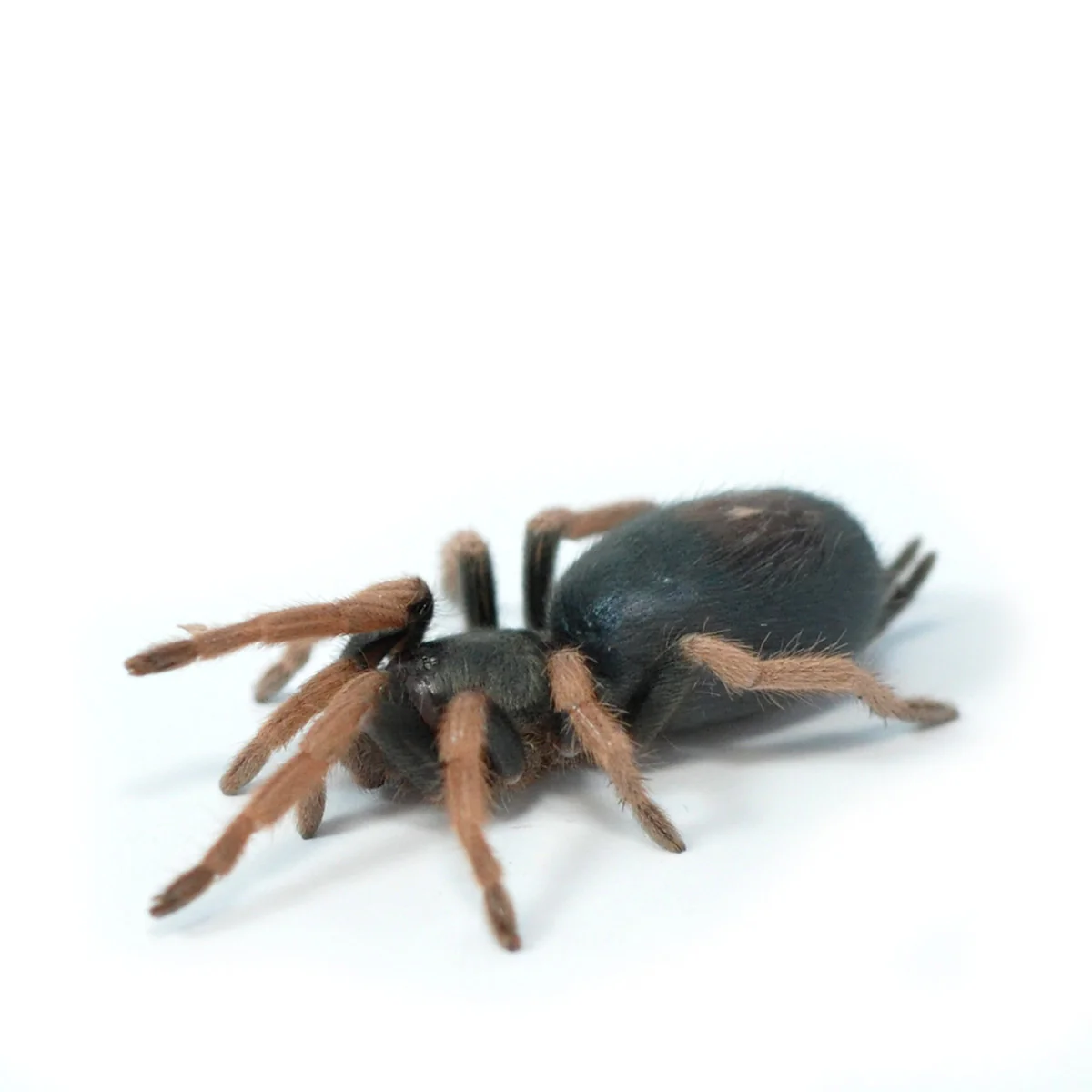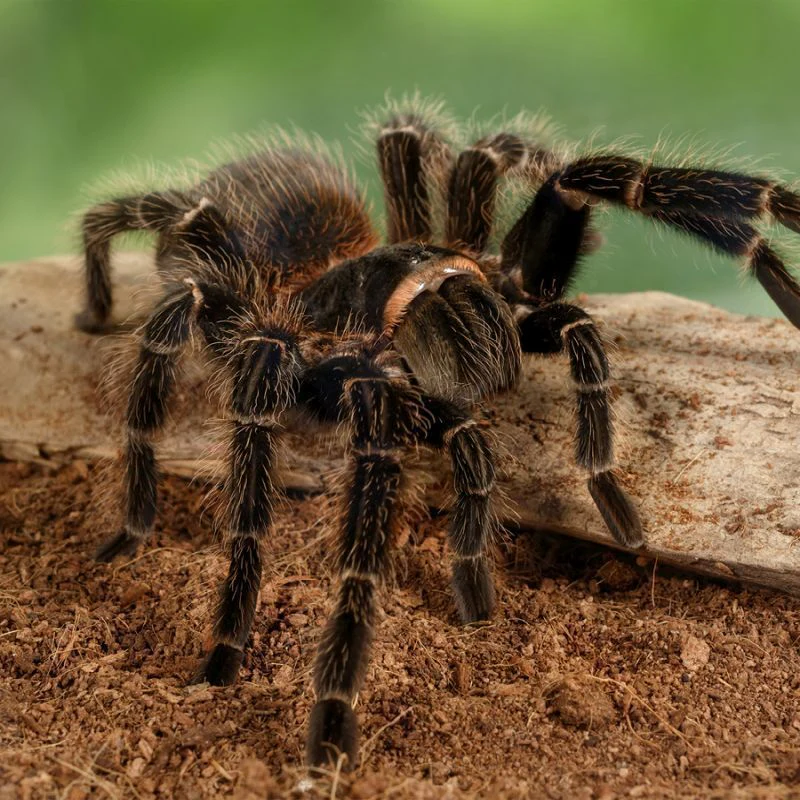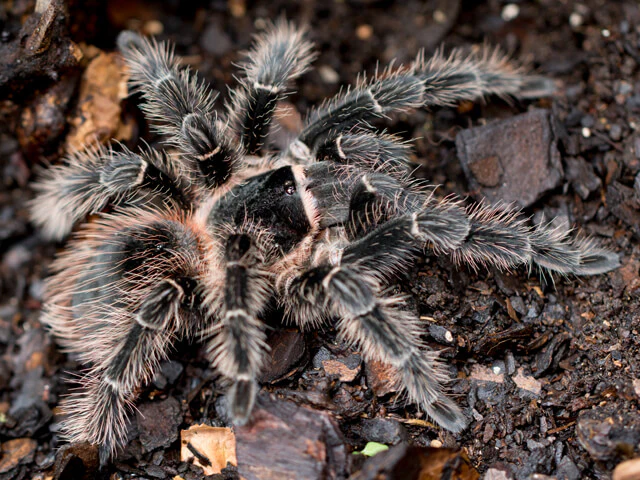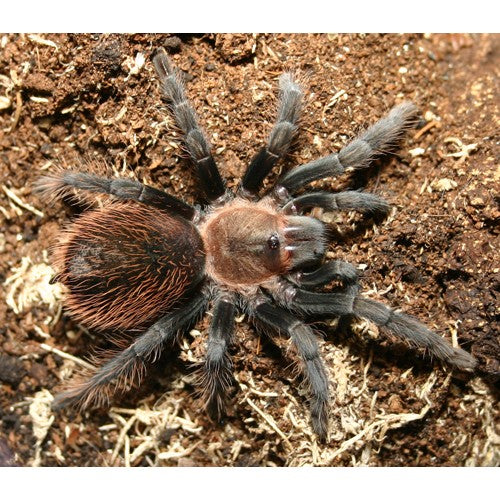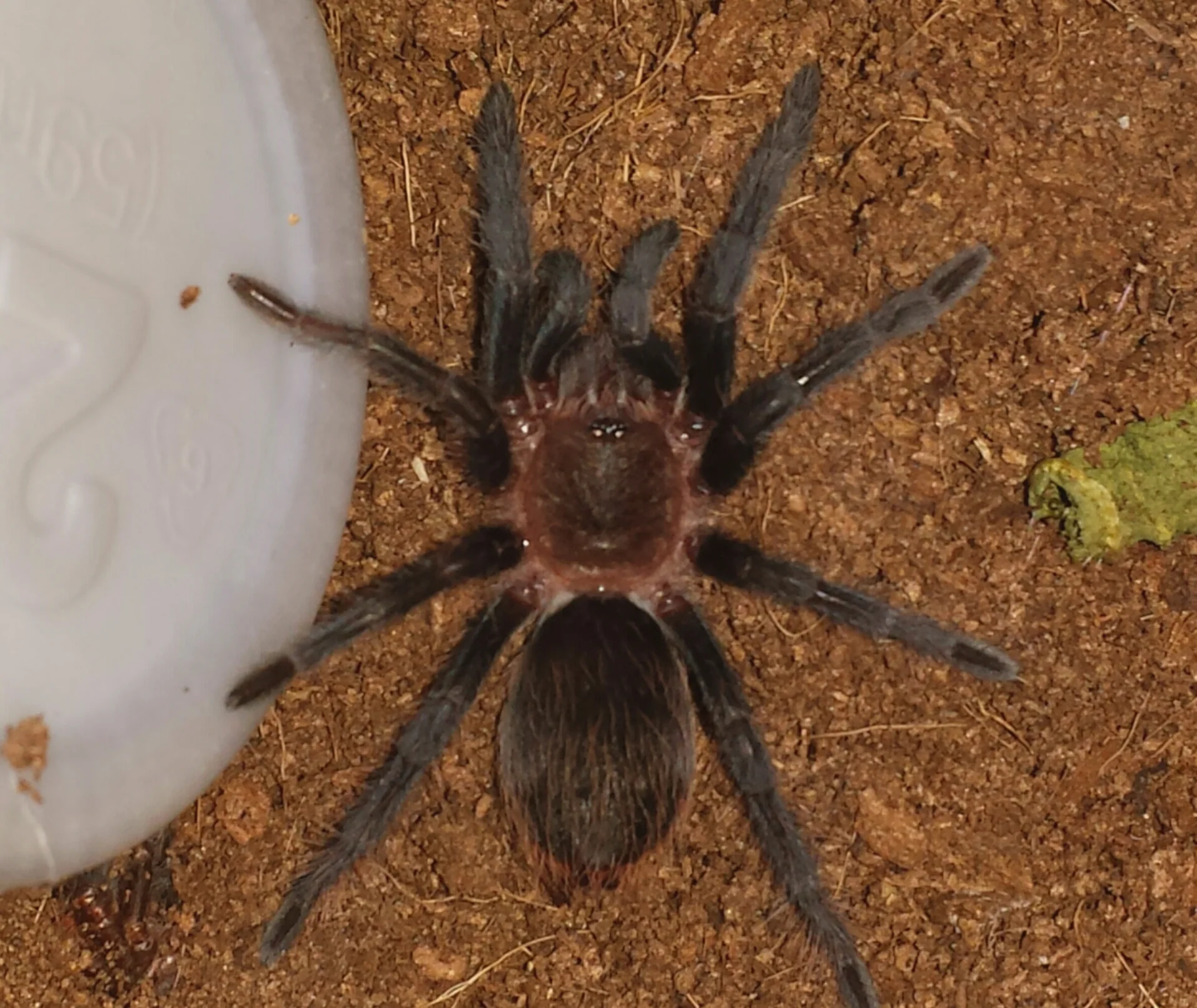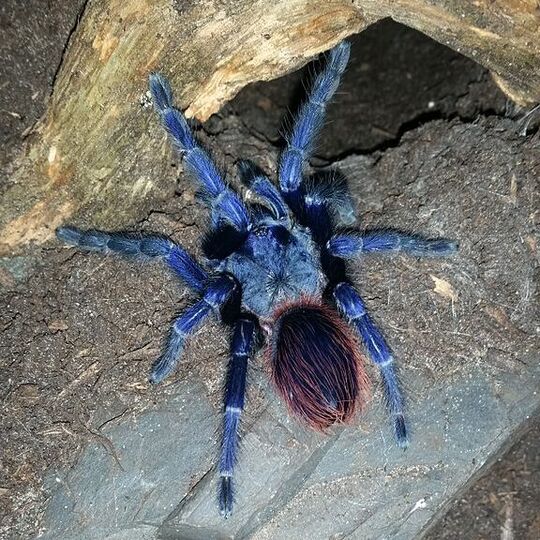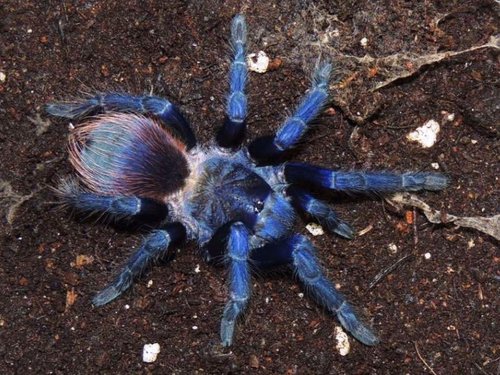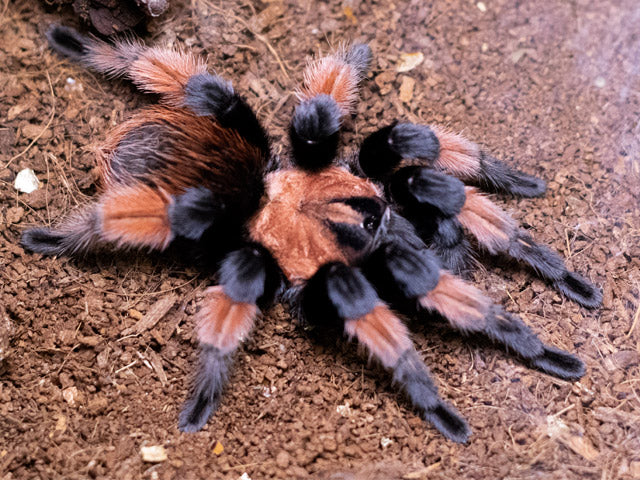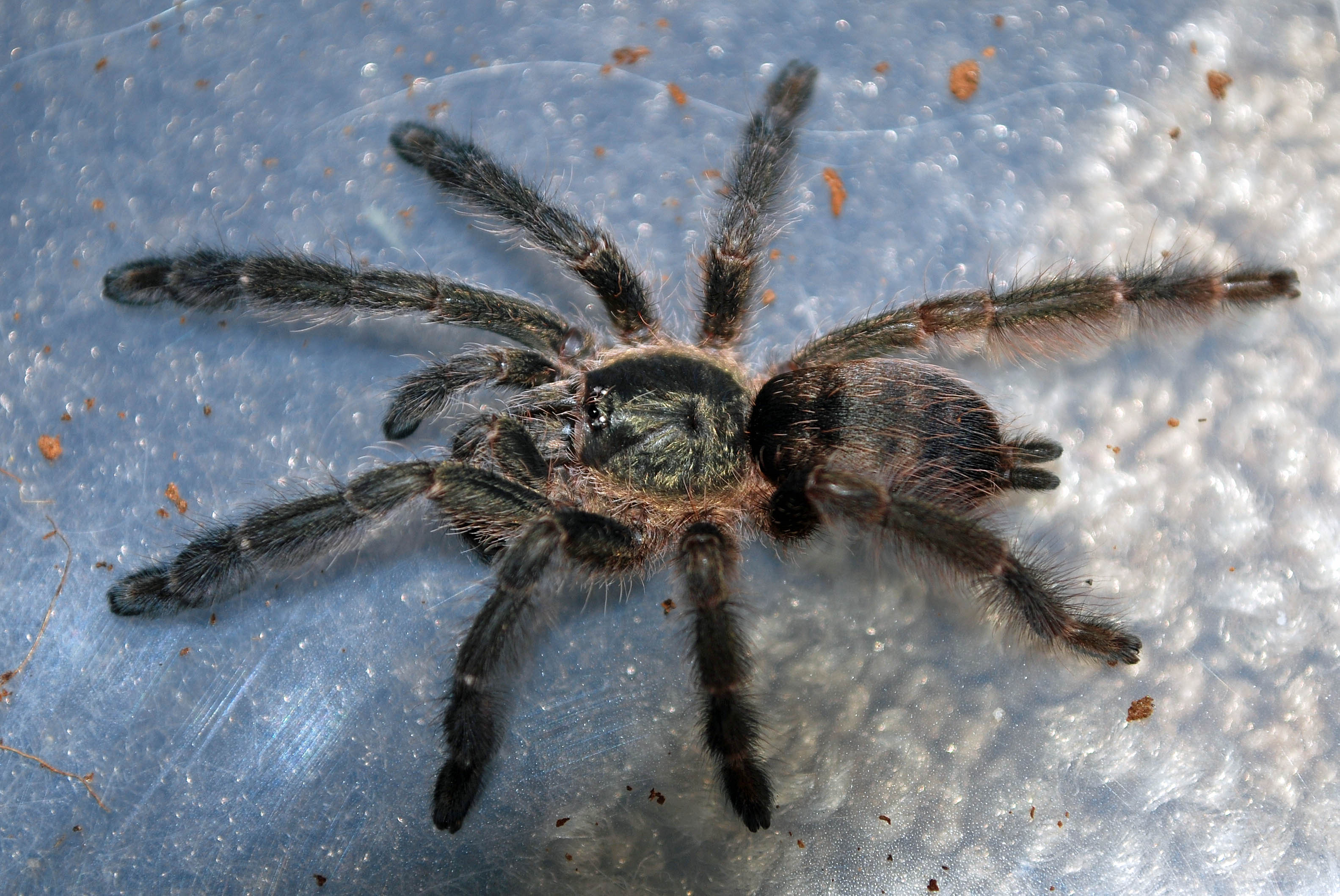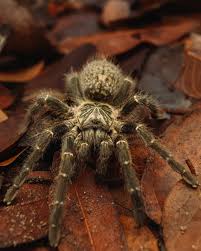
Kilimanjaro Mustard Baboon Tarantula (Pterinochilus murinus “Kilimanjaro Mustard”)
Kilimanjaro Mustard Baboon Tarantula (Pterinochilus chordatus) Care Sheet
Quick Facts
| Attribute | Details |
|---|---|
| Common Name | Kilimanjaro Mustard Baboon Tarantula |
| Scientific Name | Pterinochilus chordatus |
| Origin | East Africa (Tanzania, Kenya) |
| Adult Size | 12–15 cm leg span |
| Lifespan | Females: 8–12 years, Males: 3–4 years |
| Activity | Terrestrial / burrowing, nocturnal predator |
Behavior
-
Extremely fast, defensive, and aggressive; not suitable for handling.
-
Burrower; spends most of the day hidden in substrate or under decor.
-
Active hunter at night; may display threat posture when disturbed.
-
Known for potent venom relative to size; highly defensive.
Enclosure Requirements
-
Tank Size: Minimum 30–40 liters for a single adult
-
Substrate: 8–12 cm of coconut fiber, soil, or peat moss; slightly moist but well-drained
-
Decor: Cork bark, rocks, logs; provide secure burrow or hide
-
Humidity: 60–70%
-
Temperature:
-
Day: 24–28°C
-
Night: 20–24°C
-
-
Lighting: Low light; indirect only
-
Ventilation: Moderate airflow; avoid stagnant air
Compatibility
-
Best housed singly; aggressive and highly territorial.
-
Avoid cohabiting with other spiders or small arthropods.
Diet
-
Carnivorous; feeds on live prey:
-
Crickets
-
Roaches
-
Mealworms / superworms
-
-
Feed juveniles 2–3× per week; adults 1× per week
-
Provide shallow water dish
-
Remove uneaten prey after 24 hours
Care Tips
-
Avoid handling; very fast and defensive.
-
Maintain proper substrate and humidity for burrowing and molting.
-
Provide secure burrows and hiding places.
-
Spot-clean regularly; remove mold and waste.
-
Ensure secure lid; escape-prone if stressed.
Visual Quick Guide
-
🏠 Enclosure: ≥30–40 L, burrowable substrate, hides
-
🌡️ Temp: Day 24–28°C / Night 20–24°C
-
💧 Humidity: 60–70%
-
🍴 Diet: Carnivorous (live insects)
-
🕒 Activity: Nocturnal, burrowing predator
-
⚠️ Stress: Avoid handling; provide secure burrows
Please note: We don't ship live animals. You can order online and choose click and collect, and we will hold it for you.
More Images
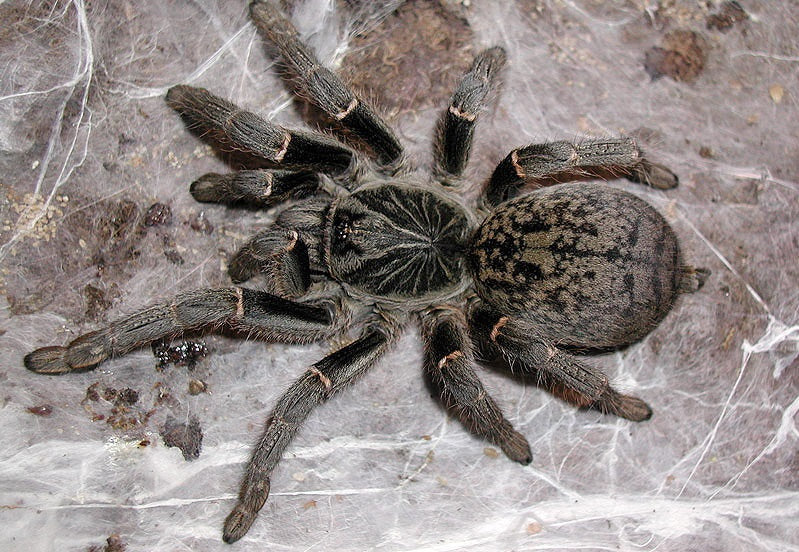
Kilimanjaro Mustard Baboon Tarantula (Pterinochilus murinus “Kilimanjaro Mustard”)
Kilimanjaro Mustard Baboon Tarantula (Pterinochilus chordatus) Care Sheet
Quick Facts
| Attribute | Details |
|---|---|
| Common Name | Kilimanjaro Mustard Baboon Tarantula |
| Scientific Name | Pterinochilus chordatus |
| Origin | East Africa (Tanzania, Kenya) |
| Adult Size | 12–15 cm leg span |
| Lifespan | Females: 8–12 years, Males: 3–4 years |
| Activity | Terrestrial / burrowing, nocturnal predator |
Behavior
-
Extremely fast, defensive, and aggressive; not suitable for handling.
-
Burrower; spends most of the day hidden in substrate or under decor.
-
Active hunter at night; may display threat posture when disturbed.
-
Known for potent venom relative to size; highly defensive.
Enclosure Requirements
-
Tank Size: Minimum 30–40 liters for a single adult
-
Substrate: 8–12 cm of coconut fiber, soil, or peat moss; slightly moist but well-drained
-
Decor: Cork bark, rocks, logs; provide secure burrow or hide
-
Humidity: 60–70%
-
Temperature:
-
Day: 24–28°C
-
Night: 20–24°C
-
-
Lighting: Low light; indirect only
-
Ventilation: Moderate airflow; avoid stagnant air
Compatibility
-
Best housed singly; aggressive and highly territorial.
-
Avoid cohabiting with other spiders or small arthropods.
Diet
-
Carnivorous; feeds on live prey:
-
Crickets
-
Roaches
-
Mealworms / superworms
-
-
Feed juveniles 2–3× per week; adults 1× per week
-
Provide shallow water dish
-
Remove uneaten prey after 24 hours
Care Tips
-
Avoid handling; very fast and defensive.
-
Maintain proper substrate and humidity for burrowing and molting.
-
Provide secure burrows and hiding places.
-
Spot-clean regularly; remove mold and waste.
-
Ensure secure lid; escape-prone if stressed.
Visual Quick Guide
-
🏠 Enclosure: ≥30–40 L, burrowable substrate, hides
-
🌡️ Temp: Day 24–28°C / Night 20–24°C
-
💧 Humidity: 60–70%
-
🍴 Diet: Carnivorous (live insects)
-
🕒 Activity: Nocturnal, burrowing predator
-
⚠️ Stress: Avoid handling; provide secure burrows
Please note: We don't ship live animals. You can order online and choose click and collect, and we will hold it for you.
Product Information
Product Information
Shipping & Returns
Shipping & Returns
Description
Kilimanjaro Mustard Baboon Tarantula (Pterinochilus chordatus) Care Sheet
Quick Facts
| Attribute | Details |
|---|---|
| Common Name | Kilimanjaro Mustard Baboon Tarantula |
| Scientific Name | Pterinochilus chordatus |
| Origin | East Africa (Tanzania, Kenya) |
| Adult Size | 12–15 cm leg span |
| Lifespan | Females: 8–12 years, Males: 3–4 years |
| Activity | Terrestrial / burrowing, nocturnal predator |
Behavior
-
Extremely fast, defensive, and aggressive; not suitable for handling.
-
Burrower; spends most of the day hidden in substrate or under decor.
-
Active hunter at night; may display threat posture when disturbed.
-
Known for potent venom relative to size; highly defensive.
Enclosure Requirements
-
Tank Size: Minimum 30–40 liters for a single adult
-
Substrate: 8–12 cm of coconut fiber, soil, or peat moss; slightly moist but well-drained
-
Decor: Cork bark, rocks, logs; provide secure burrow or hide
-
Humidity: 60–70%
-
Temperature:
-
Day: 24–28°C
-
Night: 20–24°C
-
-
Lighting: Low light; indirect only
-
Ventilation: Moderate airflow; avoid stagnant air
Compatibility
-
Best housed singly; aggressive and highly territorial.
-
Avoid cohabiting with other spiders or small arthropods.
Diet
-
Carnivorous; feeds on live prey:
-
Crickets
-
Roaches
-
Mealworms / superworms
-
-
Feed juveniles 2–3× per week; adults 1× per week
-
Provide shallow water dish
-
Remove uneaten prey after 24 hours
Care Tips
-
Avoid handling; very fast and defensive.
-
Maintain proper substrate and humidity for burrowing and molting.
-
Provide secure burrows and hiding places.
-
Spot-clean regularly; remove mold and waste.
-
Ensure secure lid; escape-prone if stressed.
Visual Quick Guide
-
🏠 Enclosure: ≥30–40 L, burrowable substrate, hides
-
🌡️ Temp: Day 24–28°C / Night 20–24°C
-
💧 Humidity: 60–70%
-
🍴 Diet: Carnivorous (live insects)
-
🕒 Activity: Nocturnal, burrowing predator
-
⚠️ Stress: Avoid handling; provide secure burrows
Please note: We don't ship live animals. You can order online and choose click and collect, and we will hold it for you.