🎉 Up to 70% Off Selected ItemsShop Sale
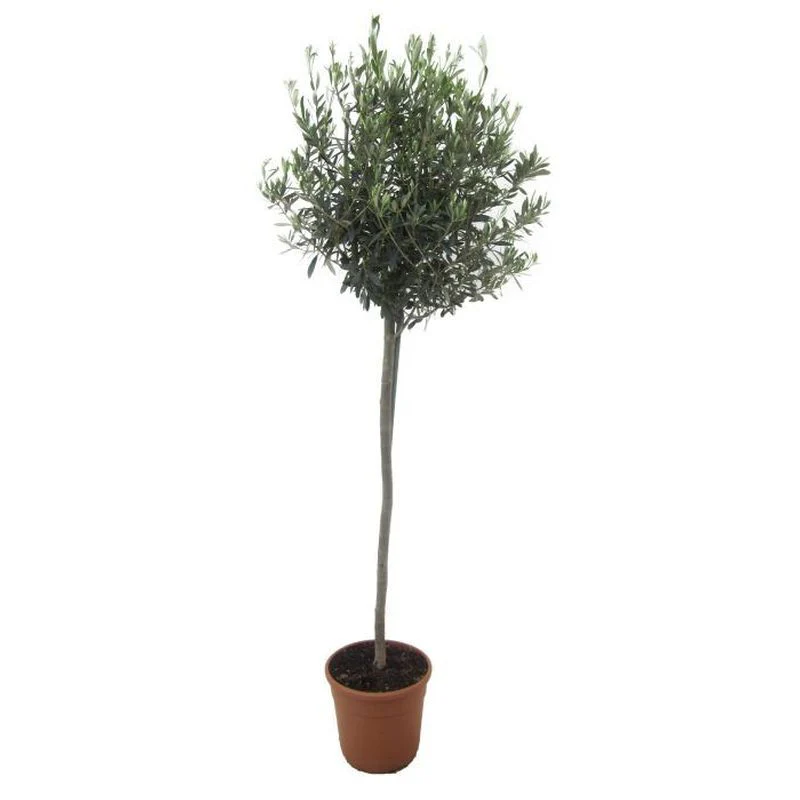
Olea Europaea | Olive Tree - Stem 90cm 170cm Tall
Olea europaea
Olive tree, 170 cm total, 90 cm stem
Olives (Olea europaea) are evergreen trees that will add a Mediterranean touch to the garden. They are suited to garden or container cultivation, and may produce fruit in mild regions and warm summers.
Please note that due to the delicate nature of this item that we can only deliver this ourselves to Dublin or by pallet nationwide
Plant Size
- Mature Height: 5-10m
- Mature Spread: 5-10m Why We Love It
- Ideal for gardens, patios or as a present
- Disease resistant
- Easy to maintain What To Know
- Position
- Full sun
- Soil type
- Moist, well drained, fertile
- Fruit producing
- August
- October
- Eventual Height
- 2-3 meters if not pruned
- Planting Time
- September
- January How to Care
- This tree will grow in a sheltered spot in full sun. Ensure that there has very good drainage, at least 5 cm of pebbles at the bottom of the pot, which should have a large hole in the bottom. For the first few years, water regularly during their growth period.
- Olives grow very slowly, so don’t require much pruning. However, pinching out young plants can help to encourage them to develop a branching shape. Once they are 1.5m (5ft high), select three or four of the strongest and best-placed shoots to retain, and pinch out the others.
- If needed, in late spring or early summer, remove dead, diseased or dying branches. At the same time, thin out branches to allow light into the centre of the tree and remove any branches that spoil the shape. Avoid pruning too hard as this will result in the over-production of non-fruiting water shoots.
- In order to initiate flowers and fruit, olive trees need a two-month period of cold weather (with temperatures below 10°C (50°F). They also need a fluctuation between day and night time temperatures. Plants kept indoors are therefore unlikely to flower.
- Olives are best-propagated by grafting, which is the preferred method in olive-growing regions. Grafting on to stock of Osmanthus can help produce smaller trees.
- Olea europaea can also be propagated by taking semi-ripe cuttings, 10-15cm (4-6in) long, in summer. Alternatively, in winter take hardwood cuttings of up to 30cm (12in) from one
- or two-year-old wood on mature trees, and root with bottom heat.
- Mature Height: 5-10m
- Mature Spread: 5-10m Why We Love It
- Ideal for gardens, patios or as a present
- Disease resistant
- Easy to maintain What To Know
- Position
- Full sun
- Soil type
- Moist, well drained, fertile
- Fruit producing
- August
- October
- Eventual Height
- 2-3 meters if not pruned
- Planting Time
- September
- January How to Care
- This tree will grow in a sheltered spot in full sun. Ensure that there has very good drainage, at least 5 cm of pebbles at the bottom of the pot, which should have a large hole in the bottom. For the first few years, water regularly during their growth period.
- Olives grow very slowly, so don’t require much pruning. However, pinching out young plants can help to encourage them to develop a branching shape. Once they are 1.5m (5ft high), select three or four of the strongest and best-placed shoots to retain, and pinch out the others.
- If needed, in late spring or early summer, remove dead, diseased or dying branches. At the same time, thin out branches to allow light into the centre of the tree and remove any branches that spoil the shape. Avoid pruning too hard as this will result in the over-production of non-fruiting water shoots.
- In order to initiate flowers and fruit, olive trees need a two-month period of cold weather (with temperatures below 10°C (50°F). They also need a fluctuation between day and night time temperatures. Plants kept indoors are therefore unlikely to flower.
- Olives are best-propagated by grafting, which is the preferred method in olive-growing regions. Grafting on to stock of Osmanthus can help produce smaller trees.
- Olea europaea can also be propagated by taking semi-ripe cuttings, 10-15cm (4-6in) long, in summer. Alternatively, in winter take hardwood cuttings of up to 30cm (12in) from one
- or two-year-old wood on mature trees, and root with bottom heat.
$40.65
Original: $116.13
-65%Olea Europaea | Olive Tree - Stem 90cm 170cm Tall—
$116.13
$40.65Olea Europaea | Olive Tree - Stem 90cm 170cm Tall
Olea europaea
Olive tree, 170 cm total, 90 cm stem
Olives (Olea europaea) are evergreen trees that will add a Mediterranean touch to the garden. They are suited to garden or container cultivation, and may produce fruit in mild regions and warm summers.
Please note that due to the delicate nature of this item that we can only deliver this ourselves to Dublin or by pallet nationwide
Plant Size
- Mature Height: 5-10m
- Mature Spread: 5-10m Why We Love It
- Ideal for gardens, patios or as a present
- Disease resistant
- Easy to maintain What To Know
- Position
- Full sun
- Soil type
- Moist, well drained, fertile
- Fruit producing
- August
- October
- Eventual Height
- 2-3 meters if not pruned
- Planting Time
- September
- January How to Care
- This tree will grow in a sheltered spot in full sun. Ensure that there has very good drainage, at least 5 cm of pebbles at the bottom of the pot, which should have a large hole in the bottom. For the first few years, water regularly during their growth period.
- Olives grow very slowly, so don’t require much pruning. However, pinching out young plants can help to encourage them to develop a branching shape. Once they are 1.5m (5ft high), select three or four of the strongest and best-placed shoots to retain, and pinch out the others.
- If needed, in late spring or early summer, remove dead, diseased or dying branches. At the same time, thin out branches to allow light into the centre of the tree and remove any branches that spoil the shape. Avoid pruning too hard as this will result in the over-production of non-fruiting water shoots.
- In order to initiate flowers and fruit, olive trees need a two-month period of cold weather (with temperatures below 10°C (50°F). They also need a fluctuation between day and night time temperatures. Plants kept indoors are therefore unlikely to flower.
- Olives are best-propagated by grafting, which is the preferred method in olive-growing regions. Grafting on to stock of Osmanthus can help produce smaller trees.
- Olea europaea can also be propagated by taking semi-ripe cuttings, 10-15cm (4-6in) long, in summer. Alternatively, in winter take hardwood cuttings of up to 30cm (12in) from one
- or two-year-old wood on mature trees, and root with bottom heat.
- Mature Height: 5-10m
- Mature Spread: 5-10m Why We Love It
- Ideal for gardens, patios or as a present
- Disease resistant
- Easy to maintain What To Know
- Position
- Full sun
- Soil type
- Moist, well drained, fertile
- Fruit producing
- August
- October
- Eventual Height
- 2-3 meters if not pruned
- Planting Time
- September
- January How to Care
- This tree will grow in a sheltered spot in full sun. Ensure that there has very good drainage, at least 5 cm of pebbles at the bottom of the pot, which should have a large hole in the bottom. For the first few years, water regularly during their growth period.
- Olives grow very slowly, so don’t require much pruning. However, pinching out young plants can help to encourage them to develop a branching shape. Once they are 1.5m (5ft high), select three or four of the strongest and best-placed shoots to retain, and pinch out the others.
- If needed, in late spring or early summer, remove dead, diseased or dying branches. At the same time, thin out branches to allow light into the centre of the tree and remove any branches that spoil the shape. Avoid pruning too hard as this will result in the over-production of non-fruiting water shoots.
- In order to initiate flowers and fruit, olive trees need a two-month period of cold weather (with temperatures below 10°C (50°F). They also need a fluctuation between day and night time temperatures. Plants kept indoors are therefore unlikely to flower.
- Olives are best-propagated by grafting, which is the preferred method in olive-growing regions. Grafting on to stock of Osmanthus can help produce smaller trees.
- Olea europaea can also be propagated by taking semi-ripe cuttings, 10-15cm (4-6in) long, in summer. Alternatively, in winter take hardwood cuttings of up to 30cm (12in) from one
- or two-year-old wood on mature trees, and root with bottom heat.
Product Information
Product Information
Shipping & Returns
Shipping & Returns
Description
Olea europaea
Olive tree, 170 cm total, 90 cm stem
Olives (Olea europaea) are evergreen trees that will add a Mediterranean touch to the garden. They are suited to garden or container cultivation, and may produce fruit in mild regions and warm summers.
Please note that due to the delicate nature of this item that we can only deliver this ourselves to Dublin or by pallet nationwide
Plant Size
- Mature Height: 5-10m
- Mature Spread: 5-10m Why We Love It
- Ideal for gardens, patios or as a present
- Disease resistant
- Easy to maintain What To Know
- Position
- Full sun
- Soil type
- Moist, well drained, fertile
- Fruit producing
- August
- October
- Eventual Height
- 2-3 meters if not pruned
- Planting Time
- September
- January How to Care
- This tree will grow in a sheltered spot in full sun. Ensure that there has very good drainage, at least 5 cm of pebbles at the bottom of the pot, which should have a large hole in the bottom. For the first few years, water regularly during their growth period.
- Olives grow very slowly, so don’t require much pruning. However, pinching out young plants can help to encourage them to develop a branching shape. Once they are 1.5m (5ft high), select three or four of the strongest and best-placed shoots to retain, and pinch out the others.
- If needed, in late spring or early summer, remove dead, diseased or dying branches. At the same time, thin out branches to allow light into the centre of the tree and remove any branches that spoil the shape. Avoid pruning too hard as this will result in the over-production of non-fruiting water shoots.
- In order to initiate flowers and fruit, olive trees need a two-month period of cold weather (with temperatures below 10°C (50°F). They also need a fluctuation between day and night time temperatures. Plants kept indoors are therefore unlikely to flower.
- Olives are best-propagated by grafting, which is the preferred method in olive-growing regions. Grafting on to stock of Osmanthus can help produce smaller trees.
- Olea europaea can also be propagated by taking semi-ripe cuttings, 10-15cm (4-6in) long, in summer. Alternatively, in winter take hardwood cuttings of up to 30cm (12in) from one
- or two-year-old wood on mature trees, and root with bottom heat.
- Mature Height: 5-10m
- Mature Spread: 5-10m Why We Love It
- Ideal for gardens, patios or as a present
- Disease resistant
- Easy to maintain What To Know
- Position
- Full sun
- Soil type
- Moist, well drained, fertile
- Fruit producing
- August
- October
- Eventual Height
- 2-3 meters if not pruned
- Planting Time
- September
- January How to Care
- This tree will grow in a sheltered spot in full sun. Ensure that there has very good drainage, at least 5 cm of pebbles at the bottom of the pot, which should have a large hole in the bottom. For the first few years, water regularly during their growth period.
- Olives grow very slowly, so don’t require much pruning. However, pinching out young plants can help to encourage them to develop a branching shape. Once they are 1.5m (5ft high), select three or four of the strongest and best-placed shoots to retain, and pinch out the others.
- If needed, in late spring or early summer, remove dead, diseased or dying branches. At the same time, thin out branches to allow light into the centre of the tree and remove any branches that spoil the shape. Avoid pruning too hard as this will result in the over-production of non-fruiting water shoots.
- In order to initiate flowers and fruit, olive trees need a two-month period of cold weather (with temperatures below 10°C (50°F). They also need a fluctuation between day and night time temperatures. Plants kept indoors are therefore unlikely to flower.
- Olives are best-propagated by grafting, which is the preferred method in olive-growing regions. Grafting on to stock of Osmanthus can help produce smaller trees.
- Olea europaea can also be propagated by taking semi-ripe cuttings, 10-15cm (4-6in) long, in summer. Alternatively, in winter take hardwood cuttings of up to 30cm (12in) from one
- or two-year-old wood on mature trees, and root with bottom heat.