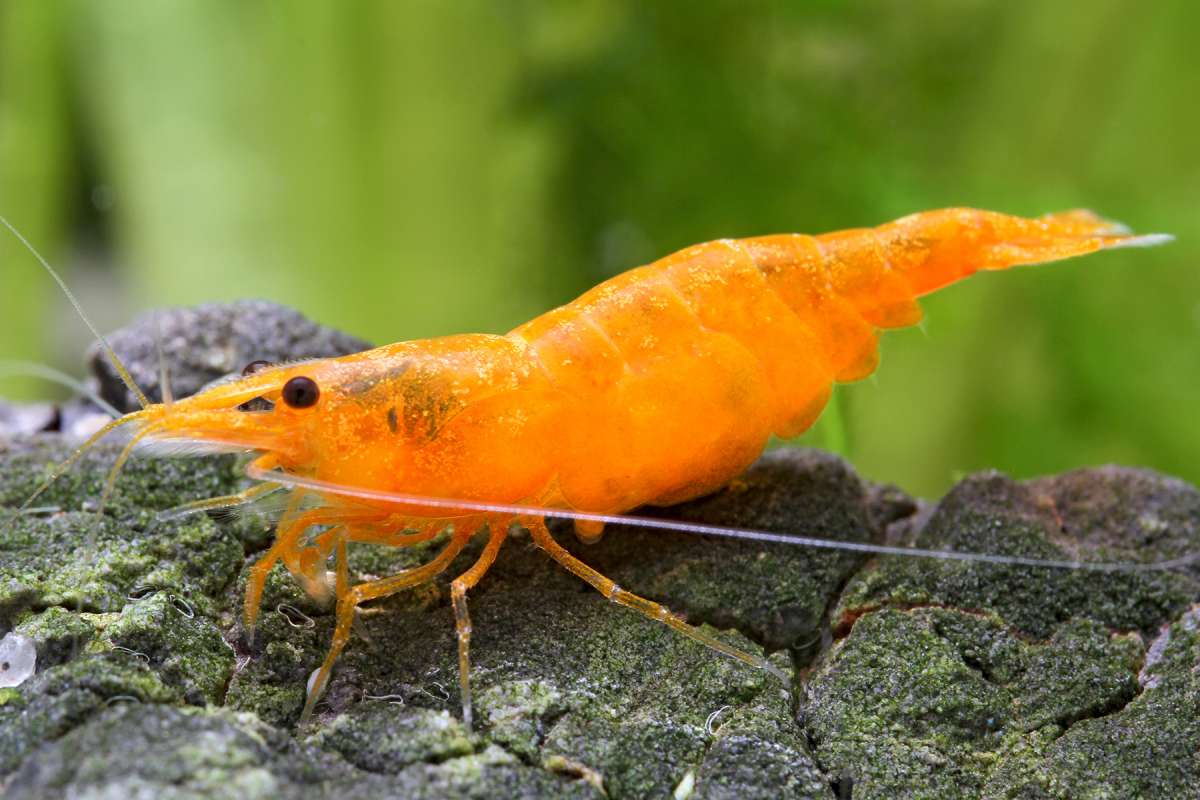
Orange Shrimp
🦐 Orange Shrimp Care Sheet
🔹 Overview
| Category | Details |
|---|---|
| Scientific Name | Neocaridina davidi (Orange variant) |
| Common Name | Orange Shrimp, Orange Cherry Shrimp |
| Origin | Taiwan (selectively bred from wild Red Cherry Shrimp) |
| Adult Size | 2–3 cm (0.8–1.2 in) |
| Lifespan | 1–2 years |
| Temperament | Peaceful, social, scavenger |
| Tank Level | Bottom-dweller |
🔹 Tank Setup
| Parameter | Ideal Range |
|---|---|
| Tank Size | 10+ liters (2.5+ gallons) for a small colony |
| Temperature | 20–27 °C (68–80 °F) |
| pH | 6.5–8.0 |
| Hardness | Soft to moderately hard (4–15 dGH) |
| Substrate | Dark gravel or sand (enhances coloration) |
| Decor | Plants, moss, driftwood, rocks, hiding spots |
| Lighting | Low to moderate |
| Filtration | Gentle flow; sponge filter recommended |
Tips:
-
Keep in groups of at least 6–10 for social behavior.
-
Provide plenty of plants and moss for grazing and hiding.
-
Avoid strong currents; they prefer calm water.
🔹 Diet
-
Type: Omnivorous / scavenger
-
Best Foods: Algae wafers, biofilm, blanched vegetables (spinach, zucchini), specialized shrimp pellets, occasional protein (frozen daphnia).
-
Feeding Frequency: Small amounts once or twice daily; avoid overfeeding.
🔹 Behavior & Compatibility
-
Peaceful and active; excellent for community tanks with small, non-aggressive fish.
-
Constantly grazes on algae and biofilm.
-
Sensitive to copper and some medications; avoid treating tank with shrimp-toxic chemicals.
🧭 Tank Mate Guide
✅ Compatible Species
-
Small tetras (neon, ember)
-
Rasboras (chili, harlequin)
-
Nano fish like killifish (peaceful species)
-
Snails and other freshwater shrimp
⚠️ Avoid or Use Caution With
-
Aggressive or large fish that may eat shrimp
-
Fish that hunt in the substrate (cichlids, large barbs)
-
Copper-based medications or chemical treatments
🐣 Breeding Info
-
Method: Easy to breed in freshwater; females carry eggs under their abdomen.
-
Parental Care: None needed; adults do not harm eggs or juveniles in well-planted tanks.
-
Fry Care: Feed biofilm, finely crushed flakes, and specialized micro-foods.
🌿 Fun Facts
-
Bright orange coloration makes them highly visible in planted tanks.
-
Hardy and beginner-friendly, ideal for nano or shrimp-specific tanks.
-
Constantly grazing behavior helps control algae and clean tank surfaces.
Original: $6.96
-65%$6.96
$2.44More Images
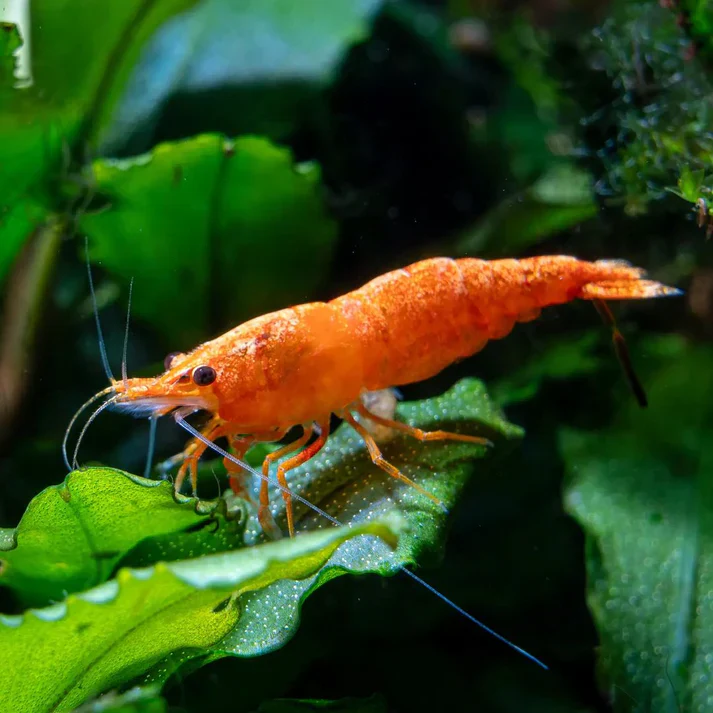

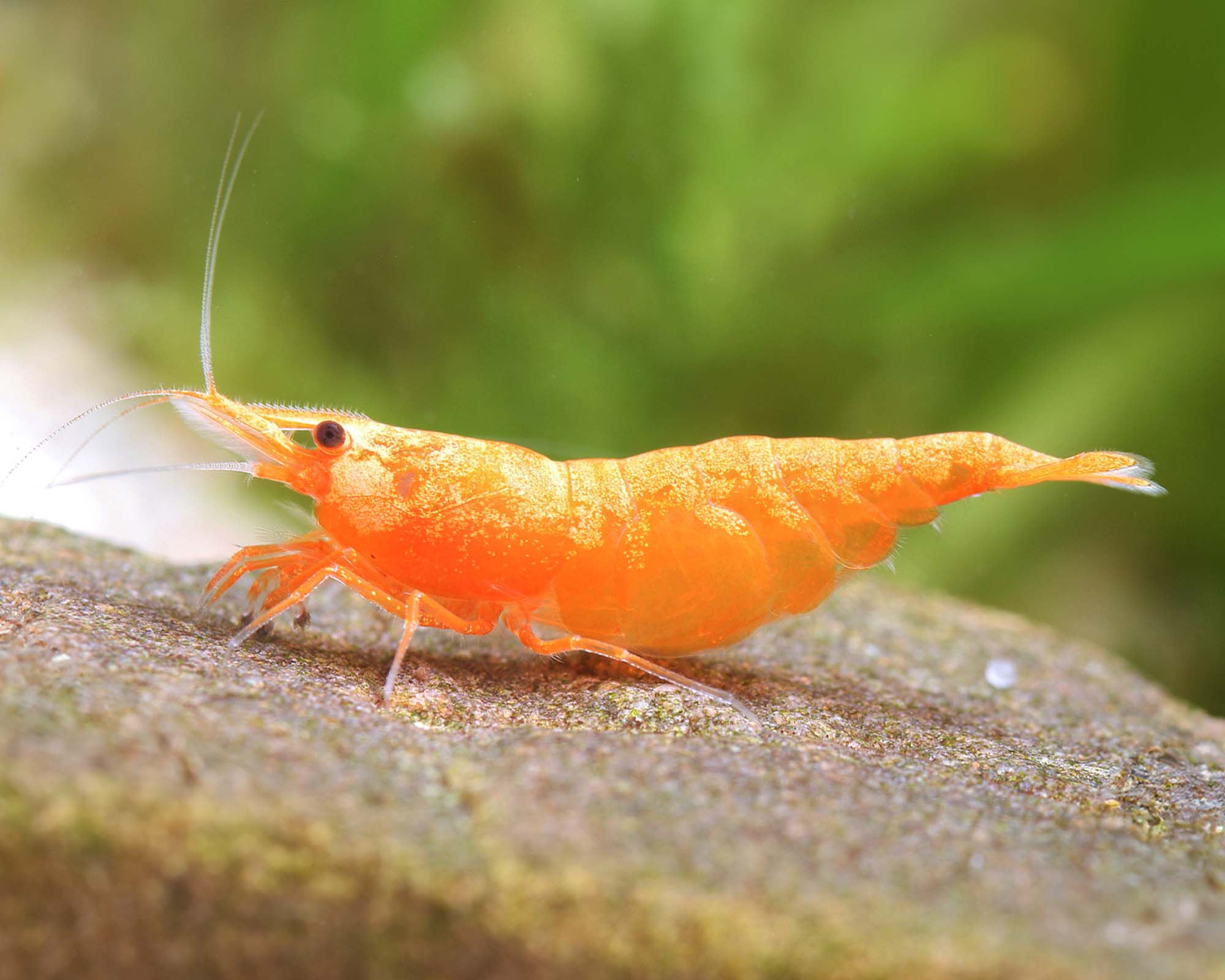
Orange Shrimp
🦐 Orange Shrimp Care Sheet
🔹 Overview
| Category | Details |
|---|---|
| Scientific Name | Neocaridina davidi (Orange variant) |
| Common Name | Orange Shrimp, Orange Cherry Shrimp |
| Origin | Taiwan (selectively bred from wild Red Cherry Shrimp) |
| Adult Size | 2–3 cm (0.8–1.2 in) |
| Lifespan | 1–2 years |
| Temperament | Peaceful, social, scavenger |
| Tank Level | Bottom-dweller |
🔹 Tank Setup
| Parameter | Ideal Range |
|---|---|
| Tank Size | 10+ liters (2.5+ gallons) for a small colony |
| Temperature | 20–27 °C (68–80 °F) |
| pH | 6.5–8.0 |
| Hardness | Soft to moderately hard (4–15 dGH) |
| Substrate | Dark gravel or sand (enhances coloration) |
| Decor | Plants, moss, driftwood, rocks, hiding spots |
| Lighting | Low to moderate |
| Filtration | Gentle flow; sponge filter recommended |
Tips:
-
Keep in groups of at least 6–10 for social behavior.
-
Provide plenty of plants and moss for grazing and hiding.
-
Avoid strong currents; they prefer calm water.
🔹 Diet
-
Type: Omnivorous / scavenger
-
Best Foods: Algae wafers, biofilm, blanched vegetables (spinach, zucchini), specialized shrimp pellets, occasional protein (frozen daphnia).
-
Feeding Frequency: Small amounts once or twice daily; avoid overfeeding.
🔹 Behavior & Compatibility
-
Peaceful and active; excellent for community tanks with small, non-aggressive fish.
-
Constantly grazes on algae and biofilm.
-
Sensitive to copper and some medications; avoid treating tank with shrimp-toxic chemicals.
🧭 Tank Mate Guide
✅ Compatible Species
-
Small tetras (neon, ember)
-
Rasboras (chili, harlequin)
-
Nano fish like killifish (peaceful species)
-
Snails and other freshwater shrimp
⚠️ Avoid or Use Caution With
-
Aggressive or large fish that may eat shrimp
-
Fish that hunt in the substrate (cichlids, large barbs)
-
Copper-based medications or chemical treatments
🐣 Breeding Info
-
Method: Easy to breed in freshwater; females carry eggs under their abdomen.
-
Parental Care: None needed; adults do not harm eggs or juveniles in well-planted tanks.
-
Fry Care: Feed biofilm, finely crushed flakes, and specialized micro-foods.
🌿 Fun Facts
-
Bright orange coloration makes them highly visible in planted tanks.
-
Hardy and beginner-friendly, ideal for nano or shrimp-specific tanks.
-
Constantly grazing behavior helps control algae and clean tank surfaces.
Product Information
Product Information
Shipping & Returns
Shipping & Returns
Description
🦐 Orange Shrimp Care Sheet
🔹 Overview
| Category | Details |
|---|---|
| Scientific Name | Neocaridina davidi (Orange variant) |
| Common Name | Orange Shrimp, Orange Cherry Shrimp |
| Origin | Taiwan (selectively bred from wild Red Cherry Shrimp) |
| Adult Size | 2–3 cm (0.8–1.2 in) |
| Lifespan | 1–2 years |
| Temperament | Peaceful, social, scavenger |
| Tank Level | Bottom-dweller |
🔹 Tank Setup
| Parameter | Ideal Range |
|---|---|
| Tank Size | 10+ liters (2.5+ gallons) for a small colony |
| Temperature | 20–27 °C (68–80 °F) |
| pH | 6.5–8.0 |
| Hardness | Soft to moderately hard (4–15 dGH) |
| Substrate | Dark gravel or sand (enhances coloration) |
| Decor | Plants, moss, driftwood, rocks, hiding spots |
| Lighting | Low to moderate |
| Filtration | Gentle flow; sponge filter recommended |
Tips:
-
Keep in groups of at least 6–10 for social behavior.
-
Provide plenty of plants and moss for grazing and hiding.
-
Avoid strong currents; they prefer calm water.
🔹 Diet
-
Type: Omnivorous / scavenger
-
Best Foods: Algae wafers, biofilm, blanched vegetables (spinach, zucchini), specialized shrimp pellets, occasional protein (frozen daphnia).
-
Feeding Frequency: Small amounts once or twice daily; avoid overfeeding.
🔹 Behavior & Compatibility
-
Peaceful and active; excellent for community tanks with small, non-aggressive fish.
-
Constantly grazes on algae and biofilm.
-
Sensitive to copper and some medications; avoid treating tank with shrimp-toxic chemicals.
🧭 Tank Mate Guide
✅ Compatible Species
-
Small tetras (neon, ember)
-
Rasboras (chili, harlequin)
-
Nano fish like killifish (peaceful species)
-
Snails and other freshwater shrimp
⚠️ Avoid or Use Caution With
-
Aggressive or large fish that may eat shrimp
-
Fish that hunt in the substrate (cichlids, large barbs)
-
Copper-based medications or chemical treatments
🐣 Breeding Info
-
Method: Easy to breed in freshwater; females carry eggs under their abdomen.
-
Parental Care: None needed; adults do not harm eggs or juveniles in well-planted tanks.
-
Fry Care: Feed biofilm, finely crushed flakes, and specialized micro-foods.
🌿 Fun Facts
-
Bright orange coloration makes them highly visible in planted tanks.
-
Hardy and beginner-friendly, ideal for nano or shrimp-specific tanks.
-
Constantly grazing behavior helps control algae and clean tank surfaces.