🎉 Up to 70% Off Selected ItemsShop Sale
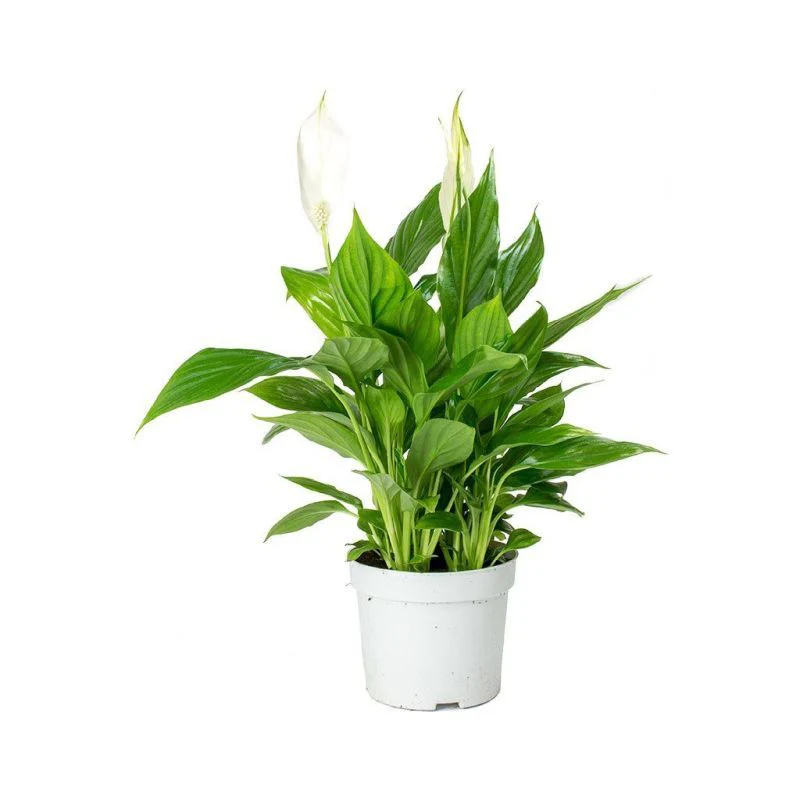
Spathiphyllum Sweet Bellini 13cm
The peace lily (Spathiphyllum) is one of the most commonly known houseplants. Peace lilies are shiny green leafed plants that bloom normally spring through summer. In warmer climates some species of Spathiphyllum are suitable for humid shade borders.
Plant Size
- Mature Height: 0.5m
- Mature Spread: 0.5m Why We Love It
- A peace lily removes formaldehyde, benzine and carbon monoxide from the air.
- Improves air quality
- Easy to grow What To Know
- Position: Partial shade
- Soil: well drianed, hummus rich
- Rate of growth: Quick growing
- Hardiness: tender (indoors only) How to Care
- Watering Watering your peace lily once a week is usually sufficient. However, when the plant is grown in low light levels or cooler temperatures water requirements may be less. Water requirements may increase with brighter light levels or warmer temperatures and during periods of rapid growth; use tepid water when watering or misting.
- Fertilizing Peace Lilies (Spathiphyllum) do best if fertilized on a regular basis. Applying a well-balanced liquid soluble fertilizer monthly works well for peace lilies. A diluted version of the monthly fertilizer used weekly is also acceptable. Leaves with brown spots may be the result of over-fertilization (concentration could be too high).
- Propagation and Potting Peace lilies (Spathiphyllum) should be re-potted when the root growth has overfilled the container. Use a humus rich potting soil to repot the peace lily. To help the roots to retain soil and prevent the root tearing, re-pot the plant when the soil is somewhat moist. You can create new peace lily plants by dividing them. Propagate by removing the peace lily from it’s container; then take a sharp knife and cut the plant from the roots to the top of the plant – this will ensure that each plants has an ample amount of roots. Take the divide pieces and follow the re-potting instructions – container will need to be same size as original container.
- Pruning Peace Lilies (Spathiphyllum) require very little pruning. Unattractive leaves can be removed on an as needed basis; follow the leaf stem to the base of the plant and cut off. Once a peace lily bloom is spent remove the same way you would a leaf. Removing the bloom helps to encourage more blooms.
- Mature Height: 0.5m
- Mature Spread: 0.5m Why We Love It
- A peace lily removes formaldehyde, benzine and carbon monoxide from the air.
- Improves air quality
- Easy to grow What To Know
- Position: Partial shade
- Soil: well drianed, hummus rich
- Rate of growth: Quick growing
- Hardiness: tender (indoors only) How to Care
- Watering Watering your peace lily once a week is usually sufficient. However, when the plant is grown in low light levels or cooler temperatures water requirements may be less. Water requirements may increase with brighter light levels or warmer temperatures and during periods of rapid growth; use tepid water when watering or misting.
- Fertilizing Peace Lilies (Spathiphyllum) do best if fertilized on a regular basis. Applying a well-balanced liquid soluble fertilizer monthly works well for peace lilies. A diluted version of the monthly fertilizer used weekly is also acceptable. Leaves with brown spots may be the result of over-fertilization (concentration could be too high).
- Propagation and Potting Peace lilies (Spathiphyllum) should be re-potted when the root growth has overfilled the container. Use a humus rich potting soil to repot the peace lily. To help the roots to retain soil and prevent the root tearing, re-pot the plant when the soil is somewhat moist. You can create new peace lily plants by dividing them. Propagate by removing the peace lily from it’s container; then take a sharp knife and cut the plant from the roots to the top of the plant – this will ensure that each plants has an ample amount of roots. Take the divide pieces and follow the re-potting instructions – container will need to be same size as original container.
- Pruning Peace Lilies (Spathiphyllum) require very little pruning. Unattractive leaves can be removed on an as needed basis; follow the leaf stem to the base of the plant and cut off. Once a peace lily bloom is spent remove the same way you would a leaf. Removing the bloom helps to encourage more blooms.
Buy Garden Plants From Ireland's Leading Plant Experts at Newlands
$6.91
Original: $19.73
-65%Spathiphyllum Sweet Bellini 13cm—
$19.73
$6.91Spathiphyllum Sweet Bellini 13cm
The peace lily (Spathiphyllum) is one of the most commonly known houseplants. Peace lilies are shiny green leafed plants that bloom normally spring through summer. In warmer climates some species of Spathiphyllum are suitable for humid shade borders.
Plant Size
- Mature Height: 0.5m
- Mature Spread: 0.5m Why We Love It
- A peace lily removes formaldehyde, benzine and carbon monoxide from the air.
- Improves air quality
- Easy to grow What To Know
- Position: Partial shade
- Soil: well drianed, hummus rich
- Rate of growth: Quick growing
- Hardiness: tender (indoors only) How to Care
- Watering Watering your peace lily once a week is usually sufficient. However, when the plant is grown in low light levels or cooler temperatures water requirements may be less. Water requirements may increase with brighter light levels or warmer temperatures and during periods of rapid growth; use tepid water when watering or misting.
- Fertilizing Peace Lilies (Spathiphyllum) do best if fertilized on a regular basis. Applying a well-balanced liquid soluble fertilizer monthly works well for peace lilies. A diluted version of the monthly fertilizer used weekly is also acceptable. Leaves with brown spots may be the result of over-fertilization (concentration could be too high).
- Propagation and Potting Peace lilies (Spathiphyllum) should be re-potted when the root growth has overfilled the container. Use a humus rich potting soil to repot the peace lily. To help the roots to retain soil and prevent the root tearing, re-pot the plant when the soil is somewhat moist. You can create new peace lily plants by dividing them. Propagate by removing the peace lily from it’s container; then take a sharp knife and cut the plant from the roots to the top of the plant – this will ensure that each plants has an ample amount of roots. Take the divide pieces and follow the re-potting instructions – container will need to be same size as original container.
- Pruning Peace Lilies (Spathiphyllum) require very little pruning. Unattractive leaves can be removed on an as needed basis; follow the leaf stem to the base of the plant and cut off. Once a peace lily bloom is spent remove the same way you would a leaf. Removing the bloom helps to encourage more blooms.
- Mature Height: 0.5m
- Mature Spread: 0.5m Why We Love It
- A peace lily removes formaldehyde, benzine and carbon monoxide from the air.
- Improves air quality
- Easy to grow What To Know
- Position: Partial shade
- Soil: well drianed, hummus rich
- Rate of growth: Quick growing
- Hardiness: tender (indoors only) How to Care
- Watering Watering your peace lily once a week is usually sufficient. However, when the plant is grown in low light levels or cooler temperatures water requirements may be less. Water requirements may increase with brighter light levels or warmer temperatures and during periods of rapid growth; use tepid water when watering or misting.
- Fertilizing Peace Lilies (Spathiphyllum) do best if fertilized on a regular basis. Applying a well-balanced liquid soluble fertilizer monthly works well for peace lilies. A diluted version of the monthly fertilizer used weekly is also acceptable. Leaves with brown spots may be the result of over-fertilization (concentration could be too high).
- Propagation and Potting Peace lilies (Spathiphyllum) should be re-potted when the root growth has overfilled the container. Use a humus rich potting soil to repot the peace lily. To help the roots to retain soil and prevent the root tearing, re-pot the plant when the soil is somewhat moist. You can create new peace lily plants by dividing them. Propagate by removing the peace lily from it’s container; then take a sharp knife and cut the plant from the roots to the top of the plant – this will ensure that each plants has an ample amount of roots. Take the divide pieces and follow the re-potting instructions – container will need to be same size as original container.
- Pruning Peace Lilies (Spathiphyllum) require very little pruning. Unattractive leaves can be removed on an as needed basis; follow the leaf stem to the base of the plant and cut off. Once a peace lily bloom is spent remove the same way you would a leaf. Removing the bloom helps to encourage more blooms.
Buy Garden Plants From Ireland's Leading Plant Experts at Newlands
Product Information
Product Information
Shipping & Returns
Shipping & Returns
Description
The peace lily (Spathiphyllum) is one of the most commonly known houseplants. Peace lilies are shiny green leafed plants that bloom normally spring through summer. In warmer climates some species of Spathiphyllum are suitable for humid shade borders.
Plant Size
- Mature Height: 0.5m
- Mature Spread: 0.5m Why We Love It
- A peace lily removes formaldehyde, benzine and carbon monoxide from the air.
- Improves air quality
- Easy to grow What To Know
- Position: Partial shade
- Soil: well drianed, hummus rich
- Rate of growth: Quick growing
- Hardiness: tender (indoors only) How to Care
- Watering Watering your peace lily once a week is usually sufficient. However, when the plant is grown in low light levels or cooler temperatures water requirements may be less. Water requirements may increase with brighter light levels or warmer temperatures and during periods of rapid growth; use tepid water when watering or misting.
- Fertilizing Peace Lilies (Spathiphyllum) do best if fertilized on a regular basis. Applying a well-balanced liquid soluble fertilizer monthly works well for peace lilies. A diluted version of the monthly fertilizer used weekly is also acceptable. Leaves with brown spots may be the result of over-fertilization (concentration could be too high).
- Propagation and Potting Peace lilies (Spathiphyllum) should be re-potted when the root growth has overfilled the container. Use a humus rich potting soil to repot the peace lily. To help the roots to retain soil and prevent the root tearing, re-pot the plant when the soil is somewhat moist. You can create new peace lily plants by dividing them. Propagate by removing the peace lily from it’s container; then take a sharp knife and cut the plant from the roots to the top of the plant – this will ensure that each plants has an ample amount of roots. Take the divide pieces and follow the re-potting instructions – container will need to be same size as original container.
- Pruning Peace Lilies (Spathiphyllum) require very little pruning. Unattractive leaves can be removed on an as needed basis; follow the leaf stem to the base of the plant and cut off. Once a peace lily bloom is spent remove the same way you would a leaf. Removing the bloom helps to encourage more blooms.
- Mature Height: 0.5m
- Mature Spread: 0.5m Why We Love It
- A peace lily removes formaldehyde, benzine and carbon monoxide from the air.
- Improves air quality
- Easy to grow What To Know
- Position: Partial shade
- Soil: well drianed, hummus rich
- Rate of growth: Quick growing
- Hardiness: tender (indoors only) How to Care
- Watering Watering your peace lily once a week is usually sufficient. However, when the plant is grown in low light levels or cooler temperatures water requirements may be less. Water requirements may increase with brighter light levels or warmer temperatures and during periods of rapid growth; use tepid water when watering or misting.
- Fertilizing Peace Lilies (Spathiphyllum) do best if fertilized on a regular basis. Applying a well-balanced liquid soluble fertilizer monthly works well for peace lilies. A diluted version of the monthly fertilizer used weekly is also acceptable. Leaves with brown spots may be the result of over-fertilization (concentration could be too high).
- Propagation and Potting Peace lilies (Spathiphyllum) should be re-potted when the root growth has overfilled the container. Use a humus rich potting soil to repot the peace lily. To help the roots to retain soil and prevent the root tearing, re-pot the plant when the soil is somewhat moist. You can create new peace lily plants by dividing them. Propagate by removing the peace lily from it’s container; then take a sharp knife and cut the plant from the roots to the top of the plant – this will ensure that each plants has an ample amount of roots. Take the divide pieces and follow the re-potting instructions – container will need to be same size as original container.
- Pruning Peace Lilies (Spathiphyllum) require very little pruning. Unattractive leaves can be removed on an as needed basis; follow the leaf stem to the base of the plant and cut off. Once a peace lily bloom is spent remove the same way you would a leaf. Removing the bloom helps to encourage more blooms.