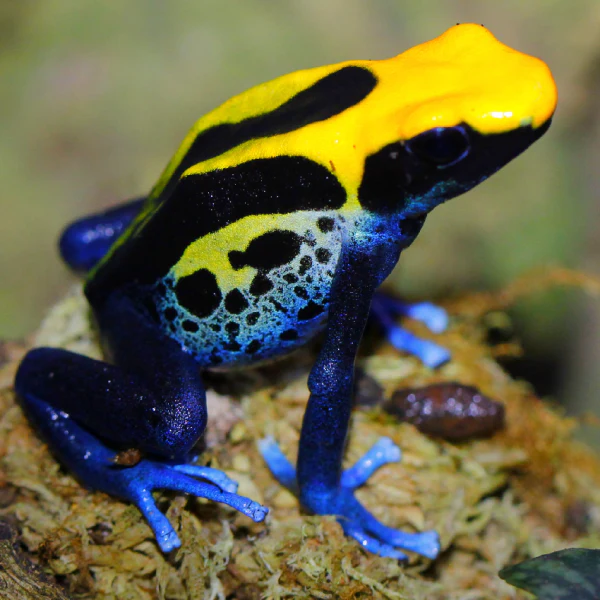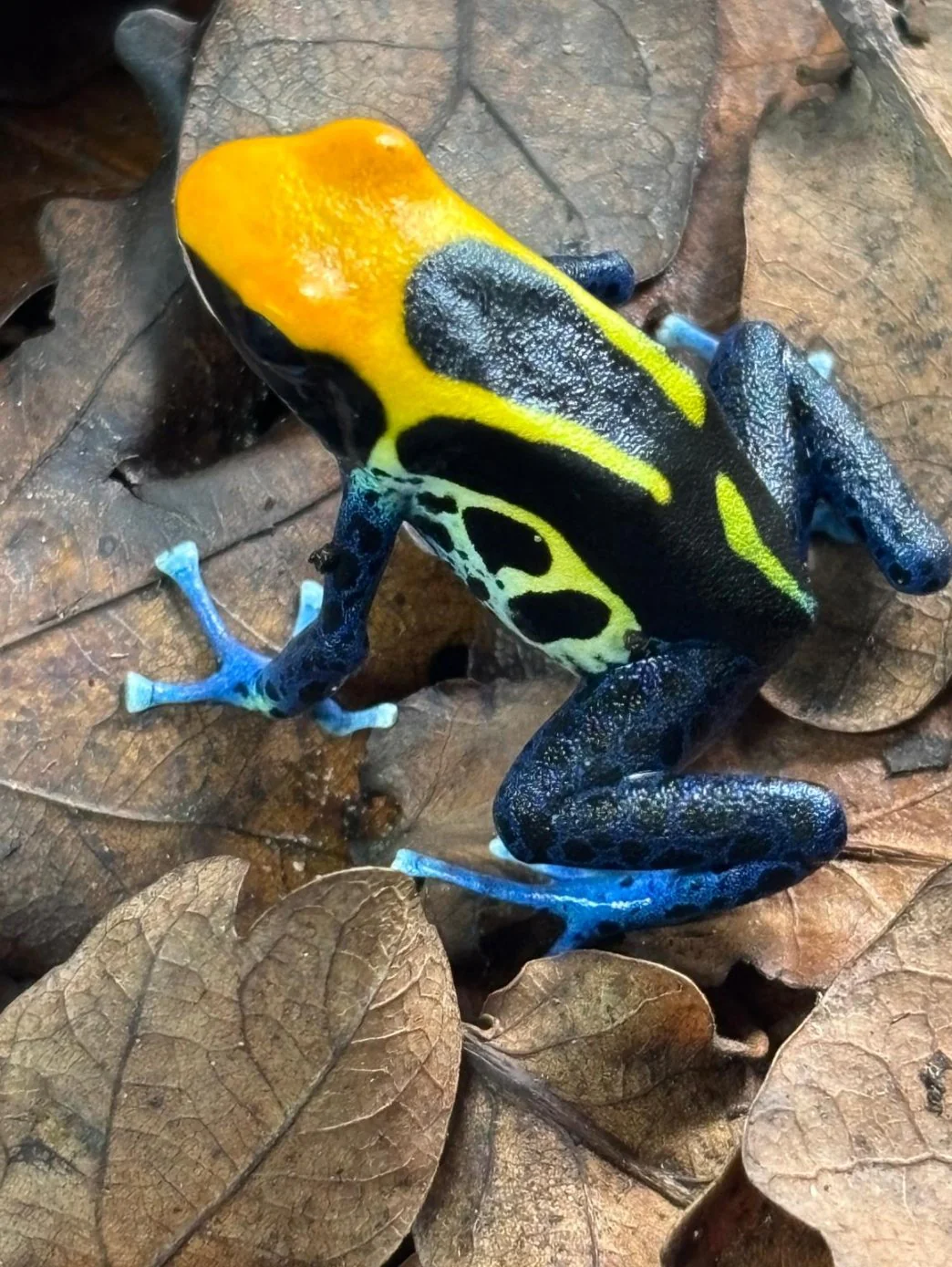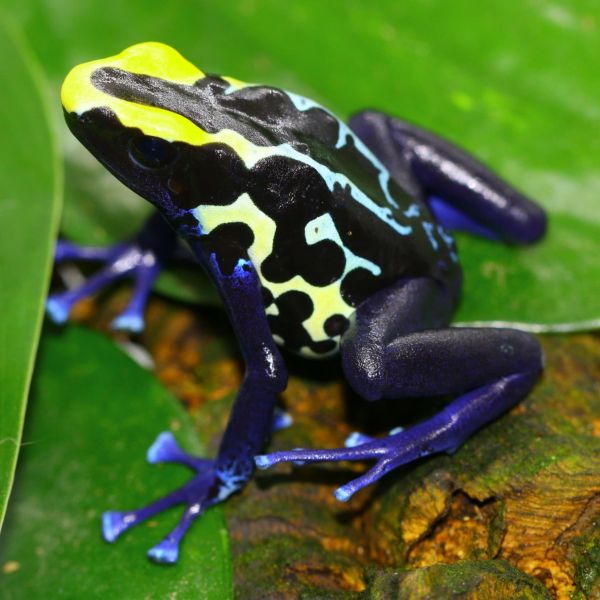
Dyeing Dart Frog 'Robertus'
Dyeing Dart Frog ‘Robertus’ (Dendrobates tinctorius “Robertus”) Care Sheet
Quick Facts
| Attribute | Details |
|---|---|
| Common Name | Dyeing Dart Frog ‘Robertus’ |
| Scientific Name | Dendrobates tinctorius “Robertus” |
| Origin | Suriname / captive-bred morph |
| Adult Size | 4–5 cm |
| Lifespan | 6–10 years in captivity |
| Activity | Diurnal, arboreal / terrestrial |
Behavior
-
Highly active, alert, and visually striking; spends time climbing and exploring foliage.
-
Social species; can be housed in small groups if space permits.
-
Displays bright coloration as a warning; captive-bred are non-toxic but delicate.
-
Avoid handling; skin is sensitive and easily stressed.
Enclosure Requirements
-
Tank Size: Minimum 20–30 liters for a small group (2–3 adults)
-
Substrate: Moist coco fiber, sphagnum moss, or soil mix to retain humidity
-
Decor: Live plants, cork bark, leaf litter, small branches for climbing and hiding
-
Humidity: 75–90%
-
Temperature:
-
Day: 24–26°C
-
Night: 20–22°C
-
-
Lighting: 10–12 hours of low to moderate light; UVB optional for plant health
-
Ventilation: Good airflow to prevent mold
Compatibility
-
Social with conspecifics; avoid overcrowding.
-
Do not house with larger amphibians or predatory species.
Diet
-
Carnivorous; feeds on small live insects:
-
Fruit flies (Drosophila)
-
Pinhead crickets
-
Springtails
-
-
Feed juveniles daily; adults 3–5× per week
-
Dust prey with calcium and vitamin supplements regularly
-
Provide shallow water or mist leaves for hydration
Care Tips
-
Avoid handling; skin is delicate and absorbs chemicals easily.
-
Maintain high humidity for hydration and skin health.
-
Spot-clean enclosure daily; remove waste and moldy substrate.
-
Provide live plants and hiding spots for enrichment and security.
Breeding
-
Oviparous; females lay small clutches of 4–12 eggs on leaves or hidden spots.
-
Eggs develop in moist conditions; adults may transport tadpoles to small water pools.
-
Stable temperature and high humidity are essential for successful breeding.
Visual Quick Guide
-
🏠 Enclosure: ≥20–30 L, humid substrate, plants, climbing branches
-
🌡️ Temp: Day 24–26°C / Night 20–22°C
-
💧 Humidity: 75–90%
-
🍴 Diet: Carnivorous (small live insects)
-
🕒 Activity: Diurnal, active climber and explorer
-
⚠️ Stress: Avoid handling; provide plenty of hiding spots and plants
Please note: We don't ship live animals. You can order online and choose click and collect, and we will hold it for you.
More Images
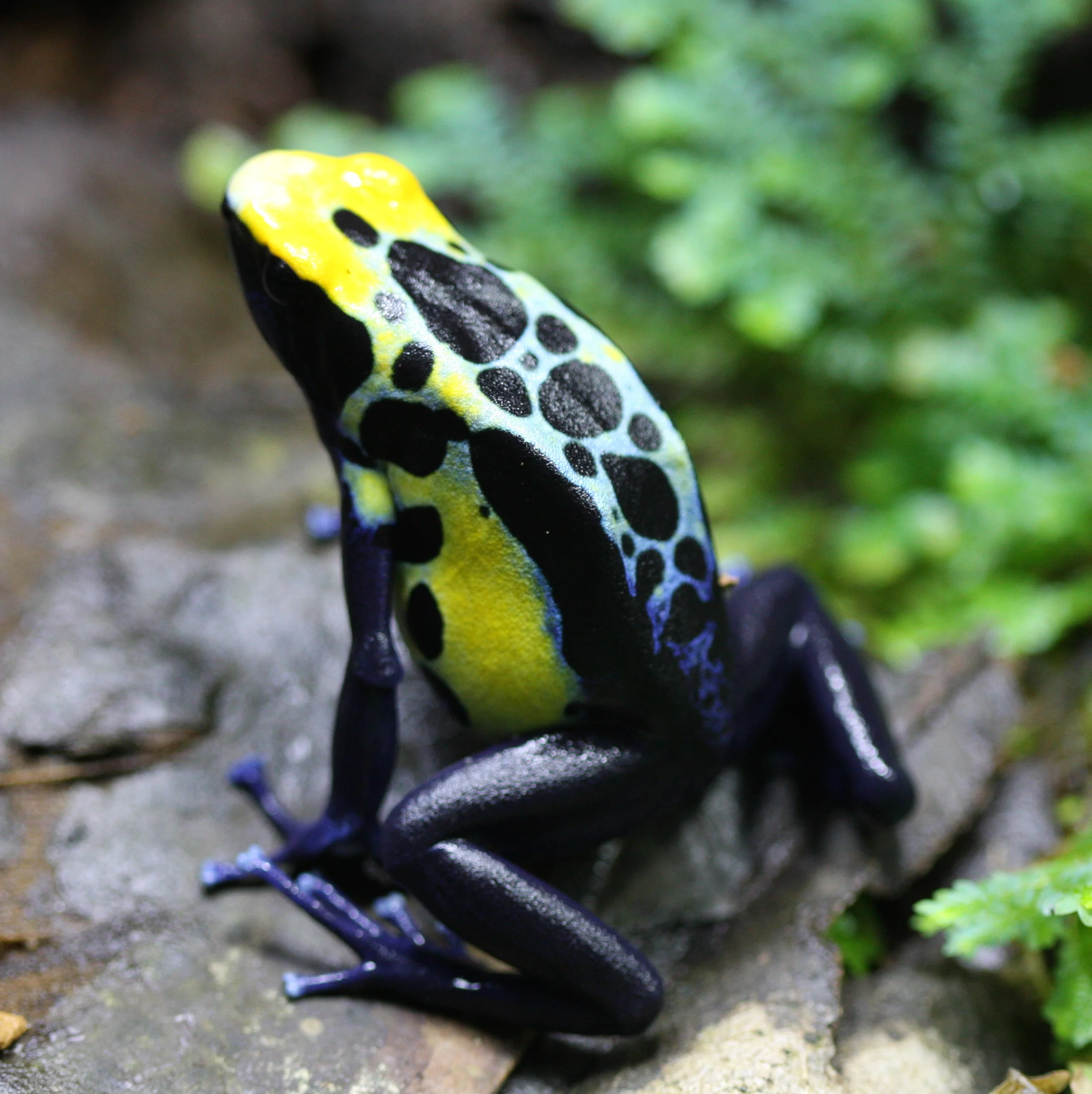
Dyeing Dart Frog 'Robertus'
Dyeing Dart Frog ‘Robertus’ (Dendrobates tinctorius “Robertus”) Care Sheet
Quick Facts
| Attribute | Details |
|---|---|
| Common Name | Dyeing Dart Frog ‘Robertus’ |
| Scientific Name | Dendrobates tinctorius “Robertus” |
| Origin | Suriname / captive-bred morph |
| Adult Size | 4–5 cm |
| Lifespan | 6–10 years in captivity |
| Activity | Diurnal, arboreal / terrestrial |
Behavior
-
Highly active, alert, and visually striking; spends time climbing and exploring foliage.
-
Social species; can be housed in small groups if space permits.
-
Displays bright coloration as a warning; captive-bred are non-toxic but delicate.
-
Avoid handling; skin is sensitive and easily stressed.
Enclosure Requirements
-
Tank Size: Minimum 20–30 liters for a small group (2–3 adults)
-
Substrate: Moist coco fiber, sphagnum moss, or soil mix to retain humidity
-
Decor: Live plants, cork bark, leaf litter, small branches for climbing and hiding
-
Humidity: 75–90%
-
Temperature:
-
Day: 24–26°C
-
Night: 20–22°C
-
-
Lighting: 10–12 hours of low to moderate light; UVB optional for plant health
-
Ventilation: Good airflow to prevent mold
Compatibility
-
Social with conspecifics; avoid overcrowding.
-
Do not house with larger amphibians or predatory species.
Diet
-
Carnivorous; feeds on small live insects:
-
Fruit flies (Drosophila)
-
Pinhead crickets
-
Springtails
-
-
Feed juveniles daily; adults 3–5× per week
-
Dust prey with calcium and vitamin supplements regularly
-
Provide shallow water or mist leaves for hydration
Care Tips
-
Avoid handling; skin is delicate and absorbs chemicals easily.
-
Maintain high humidity for hydration and skin health.
-
Spot-clean enclosure daily; remove waste and moldy substrate.
-
Provide live plants and hiding spots for enrichment and security.
Breeding
-
Oviparous; females lay small clutches of 4–12 eggs on leaves or hidden spots.
-
Eggs develop in moist conditions; adults may transport tadpoles to small water pools.
-
Stable temperature and high humidity are essential for successful breeding.
Visual Quick Guide
-
🏠 Enclosure: ≥20–30 L, humid substrate, plants, climbing branches
-
🌡️ Temp: Day 24–26°C / Night 20–22°C
-
💧 Humidity: 75–90%
-
🍴 Diet: Carnivorous (small live insects)
-
🕒 Activity: Diurnal, active climber and explorer
-
⚠️ Stress: Avoid handling; provide plenty of hiding spots and plants
Please note: We don't ship live animals. You can order online and choose click and collect, and we will hold it for you.
Product Information
Product Information
Shipping & Returns
Shipping & Returns
Description
Dyeing Dart Frog ‘Robertus’ (Dendrobates tinctorius “Robertus”) Care Sheet
Quick Facts
| Attribute | Details |
|---|---|
| Common Name | Dyeing Dart Frog ‘Robertus’ |
| Scientific Name | Dendrobates tinctorius “Robertus” |
| Origin | Suriname / captive-bred morph |
| Adult Size | 4–5 cm |
| Lifespan | 6–10 years in captivity |
| Activity | Diurnal, arboreal / terrestrial |
Behavior
-
Highly active, alert, and visually striking; spends time climbing and exploring foliage.
-
Social species; can be housed in small groups if space permits.
-
Displays bright coloration as a warning; captive-bred are non-toxic but delicate.
-
Avoid handling; skin is sensitive and easily stressed.
Enclosure Requirements
-
Tank Size: Minimum 20–30 liters for a small group (2–3 adults)
-
Substrate: Moist coco fiber, sphagnum moss, or soil mix to retain humidity
-
Decor: Live plants, cork bark, leaf litter, small branches for climbing and hiding
-
Humidity: 75–90%
-
Temperature:
-
Day: 24–26°C
-
Night: 20–22°C
-
-
Lighting: 10–12 hours of low to moderate light; UVB optional for plant health
-
Ventilation: Good airflow to prevent mold
Compatibility
-
Social with conspecifics; avoid overcrowding.
-
Do not house with larger amphibians or predatory species.
Diet
-
Carnivorous; feeds on small live insects:
-
Fruit flies (Drosophila)
-
Pinhead crickets
-
Springtails
-
-
Feed juveniles daily; adults 3–5× per week
-
Dust prey with calcium and vitamin supplements regularly
-
Provide shallow water or mist leaves for hydration
Care Tips
-
Avoid handling; skin is delicate and absorbs chemicals easily.
-
Maintain high humidity for hydration and skin health.
-
Spot-clean enclosure daily; remove waste and moldy substrate.
-
Provide live plants and hiding spots for enrichment and security.
Breeding
-
Oviparous; females lay small clutches of 4–12 eggs on leaves or hidden spots.
-
Eggs develop in moist conditions; adults may transport tadpoles to small water pools.
-
Stable temperature and high humidity are essential for successful breeding.
Visual Quick Guide
-
🏠 Enclosure: ≥20–30 L, humid substrate, plants, climbing branches
-
🌡️ Temp: Day 24–26°C / Night 20–22°C
-
💧 Humidity: 75–90%
-
🍴 Diet: Carnivorous (small live insects)
-
🕒 Activity: Diurnal, active climber and explorer
-
⚠️ Stress: Avoid handling; provide plenty of hiding spots and plants
Please note: We don't ship live animals. You can order online and choose click and collect, and we will hold it for you.